Table of Contents
Introduction
When one thinks of Warsaw, the first thing that most people think about is its dark past: the bombing of the city during WW2, the Warsaw Uprising, and decades behind the Iron Curtain. This is half of the story, however.
This is currently one of the most diverse and robust capitals of Eastern Europe, which turned out to be a synonym of destruction and became a flourishing place of creative, cultural, and business interactions.
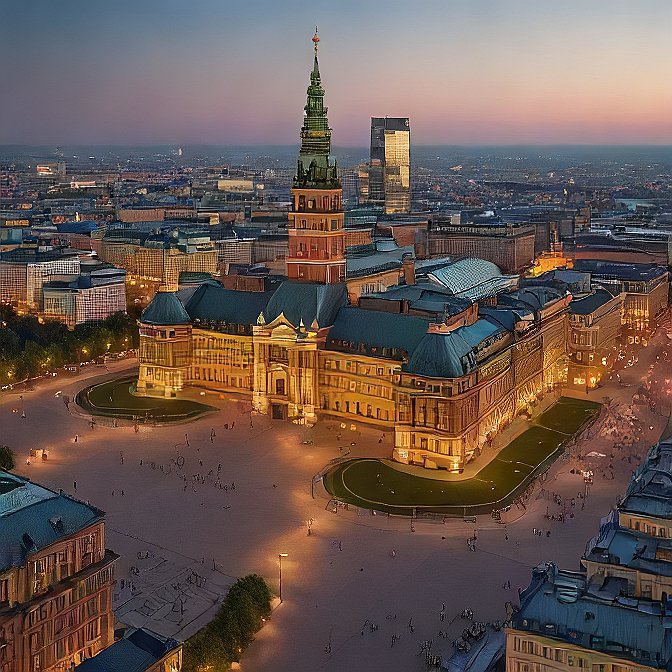
Warsaw is in no way a city of forgotten times, but is a modern metropolitan that grips the international community. Medieval squares have been reconstructed next to high-soaring skyscrapers, technology start-ups flourish in proximity to old palaces, and the locals live a very cosmopolitan life, but at the same time respect their ancient traditions.
Being the capital of Poland, Warsaw is not only a political key point, but also the economic and artistic one, forming the face of a country that is at the boundary of Western expectations and Eastern heritage.
A City Rebuilt: The Powerful History Behind Modern Warsaw
There is hardly a city in the world to represents resilience as much as Warsaw. Due to the cruel Warsaw Uprising in 1944 and subsequent German reprisals, more than 85 per cent of the city was turned into rubble during World War II. It used to be the Paris of the East with its elegant avenues and old neighborhoods that were purposefully annihilated.
Nevertheless, what succeeded was one of the most remarkable city rebirths that has ever occurred. Locals have byte-by-byte rebuilt the Old Town with the aid of pre-war architectural sketches and 18th-century paintings by Bernardo Bellotto, a pupil of Canaletto, who used to sketch architectural details in the city: the entire work, so faithful and so symbolic, that it has been recognized as UNESCO World Heritage.
Warsaw is the city of returning memories. Today, walking through the old town, one gets a sense that he or she is walking through the urban space that has returned to life. A reminder of the fact that Warsaw is a place that was taken over by war and turned into ruins, but has emerged again as a prosperous capital city, is one thing, but a national identity that could not be obliterated is another.
Warsaw Today: Poland’s Economic and Creative Hub
Modern Warsaw is the emblem of a momentum, which was once the place where destruction took place. Having a skyline that is punctuated by gleaming skyscrapers such as Zlota 44 and the Warsaw Spire, the city spearheads the economic transition of Poland. Whether it is banking and finance, or biotech, Warsaw is host to both multinationals and scrappy startups.
International events, coworking spaces, along innovation hubs have set up the city of Warsaw as a digital force and Eastern European leader in the realms of innovation and entrepreneurship. It also has a vibrant expat community that has been drawn by the opportunity and affordability.
The city is also flourishing creatively, besides being in business. Art galleries, design shops, and indie theatres are opening up urban life, and the riverside cafes have their base in new districts, Praga and Mokotów, particularly.
Warsaw, in every possible way, is a rapidly developing center of Eastern European life with a mixture of aspiration and authenticity to it.
Must-See Attractions
Warsaw’s multi-layered identity is incised in the architecture and monuments. A city is also a place of the past and present, where the city itself maintains a balance between the past and futuristic development.
Highlights include:
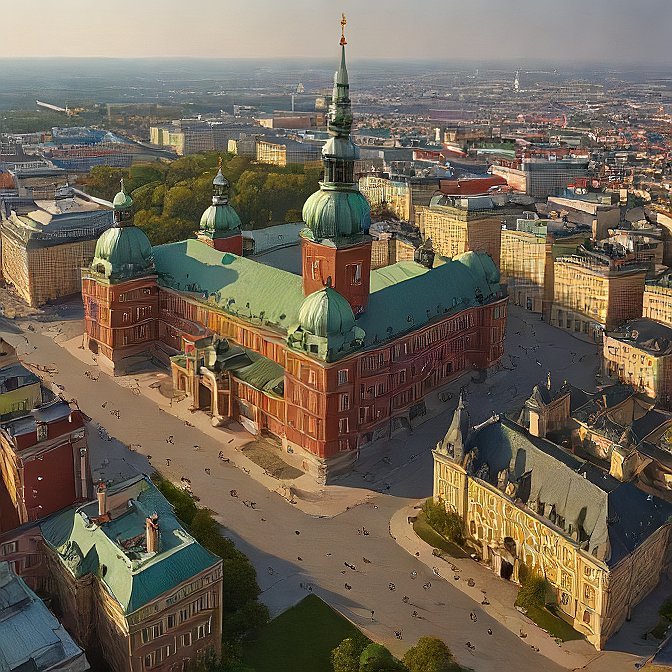
- Royal Castle: Delicately conserved, a magnificent sample of red brick work, a masterpiece of the baroque style, was the home of Polish monarchs, and now it brings pride to the nation.
- The Park of the Lazienki: A royal park that is home to the mythic palace of an Island, peacocks, concerts of Chopin, and art galleries.
- So, this is an iconic, if not famous, Mad Stalinist skyscraper, built as a gift from the USSR.
- POLIN Museum of the History of Polish Jews: A museum, an award–winner, full of the 1000-year history of the Polish Jewry.
- Wilanow Palace: Wilanow Palace is one of the finest baroque monuments, dubbed Poland’s Versailles. Dubbed a Greta Nelson Junior, Wilanow Palace is a glimpse into the Edenland of–Polish-Lithuanian Commonwealth.
- Vistula Boulevards: a riverside used to demonstrate the younger ambiance of the city, especially in the summertime.
All these best city attractions and the best Polish cultural sights in Warsaw are not only sights, but they are a token of our survival, imagination, and memories.
Neighborhoods of Note: From Historic Streets to Hip Hangouts
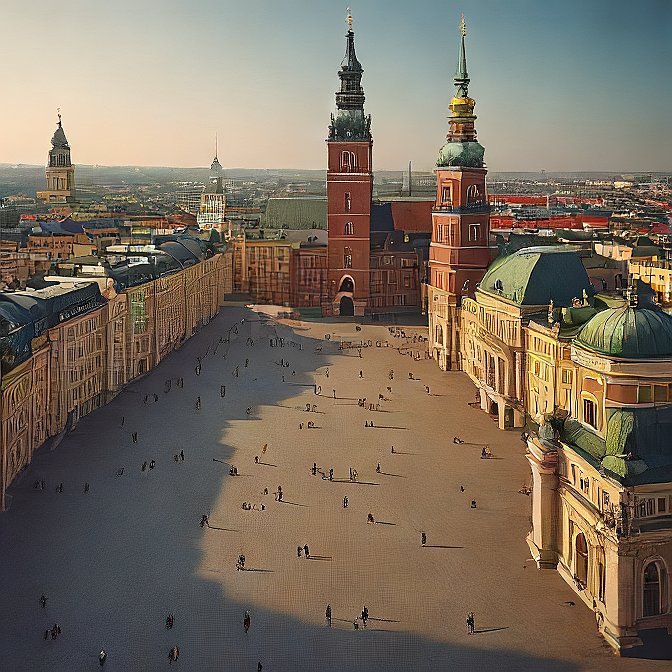
All in all, Warsaw radiates other stories. It has districts which are interesting in their manner of fusion of the heritages, the subcultures, and the local color.
- Old Town and the New Town: Narrow backstreets scarred by the cobblestones, colorful houses, and the Gothic churches- this is what Old Town in Warsaw was. Find the adorable cafes, alleys, and art galleries.
- Praga District: artisan-formerly forgotten District. Praga is punky, arty, and rapidly becoming the Warsaw arts and culture wilderness: high-rise galleries, old-fashioned markets, craft beer.
- Swieckie: Warsaw, a busy city center, stuffed with posh shopping centers, designer restaurants, and a commercial behemoth. It is also an interface of contemporary and vintage.
- Mokotów: It is residential and quite lush; the neighbourhood is filled with embassies, calm cafes, and relaxing parks. The peaceful environment and ease of transport are the other reasons why residents and foreigners are fond of this small geographical area.
Whatever it may be, the history, the nightlife, or the local feeling, those are the best neighborhoods in Warsaw to visit, and each has its own blood to it.
A Taste of Poland: Where and What to Eat in Warsaw
In Warsaw, food is not a simple meal; rather a cultural experience. Polish food is very old-fashioned, and in Warsaw, there is as much familiar traditional cuisine as there are new-fangled variations on the old favorites.
Begin with those foods that are impossible to miss and fall in love with pierogi (which are dumplings with cheese, potato, or meat inside), żurek (are thick soup of fermented rye flavor), bigos (hunter stew), as well as puznki (Polish donuts). To enjoy a real, cheap local affair, go to a milk bar (bar mleczny), state-subsidised restaurants that sell traditional Polish comfort food in no-frills surroundings.
New generation food halls like Hala Koszyki and Elektrownia PowiIsle display the new face of Polish cuisine with foodie innovations, diverse global influences, and a cool atmosphere. There is also an abundance of vegan and vegetarian food: a number of restaurants are involved in plant-based nutrition.
Be it when seated in a sidewalk refuge in the Old Town or trying out the staples of the season in a contemporary bistro, you will soon find out why Warsaw is now on the rise as a foodie capital.
Check Out: Moscow: The Dominant Capital Fueling Russia’s Unbreakable Spirit.
The Soul of the City: Art, Music, and Memory
The culture of Warsaw cannot be denied without referring to history and creativity. The city is throbbing with both old classic and modern culture.
Begin with the Fryderyk Chopin Museum, the contemporary shrine to the most popular Polish composer. Take free concerts of Chopin under the trees of Lazienki Park in summertime, dense with music and atmosphere.
Street art mentioning struggle and revival is depicted in the form of murals and portrait paintings in the Praga District. Zachęta National Gallery of Art and Museum on Vistula hosts avant-garde shows of both Polish and foreign artists.
Formation of cultural memory is also ensured. The POLIN Museum paints the history of Jews in Poland, and monuments, such as the Warsaw Rising Museum or the Jewish Culture Festival, remind people about history.
The experiences and art life that include classical music and opera or graffiti and modern installations indicate the image of the culture that makes Warsaw a layered and complicated destination with souvenirs never to forget or to be forgotten.
Nature in the City: Parks, Rivers, and Green Getaways
Warsaw, despite the urban pulse, is one of the greenest capitals of the entire Europe. Open spaces provide room to breathe and explore, especially for locals and visitors.
And 555-hectare park entitled 555-hectare park, Lazienki Park, owes its name to the Lazienki pavilions, but it is no mere garden; it is a cultural landscape where one can come across peacocks and palaces, and also the art pavilions. The Saxon Garden (comprising serene pathways through the urban area and also provides a baroque ambiance an inch away.
To see another side of town, stroll or bicycle the Vistula River Boulevards, a local go-to place with outdoor cafes, food vendors, and sand benches in the summertime. There are also rooftop gardens and warm nature cafes in winter, where even during the off-season, you can have a green break.
Want to take a look outside the city? There is a day outing to Kampinos Forest, a protected biosphere, only 30 minutes away, or the lakes and hilly landscape of Masuria.
Planning Your Visit: Tips for First-Time Travelers to Warsaw
In case you are going to visit Warsaw for the first time, by all means and means seize your time, navigation, and local knowledge can make your trip a pleasure.
- Best time to go: The mild weather of spring and fall, together with reduced numbers of people, is are good time to visit. The summer season is vibrant and full of festivals in summer and cozy Christmas markets and a snowy atmosphere during the winter.
- Transport: Warsaw possesses a good, cheap way of transportation. Plan a trip by tram, bus, or the metro, and get a Warsaw Pass, and the most famous attractions offer a discount.
- Where to stay: If you want a city with historical flair, then stay in the Old Town. In case of nightlife and the cafe scene, choose a place in either Śródmieście or Mokotów. Great hostels are available to budget travelers, and there is high style at affordable prices in the boutique hotels.
- Culture hints: Some of the Polish greetings should be learned, and the memorials are to be respected; don’t forget that Warsaw dwellers treat their city’s history and development proudly
Conclusion
The transformation of Warsaw into one of the brightest transformations can be completely summed up in an account of Europe. It is a capital that not only rebuilt the skyline, but also transformed its image, finding the middle ground between memory and hard innovation.
At present, Warsaw is a cultural power, a business hub, and a reflection of resilience, which presents international visitors with a rich historical and a breath of fresh air kind of experience. You will get lost in the cobblestone of the Old Town, among the art of Praga, enjoying the pierogi in a milk bar or working in a tech hub, and a delicious sandwich after the networking in the centre – Warsaw is ready to open its arms and share its story with you.
For more info: Click Here.
FAQs
Can tourists remain safe in 2025 Warsaw?
Yes, Warsaw is quite a safe city to travel to. It is a big capital city in Europe, and you ought to mind your environment and be on track against pickpockets in bustling spots. High tourist attraction sites, tourist-friendly areas, and public transport have been heavily policed.
How many days will be in Warsaw?
It is suggested to spend 2 to 4 days in Warsaw to enjoy both ancient history and the contemporary electricity of the city. This will enable time to visit major attractions, wine and dine, have a glimpse of a couple of museums, and experience the local atmosphere in various neighborhoods.
How is the transport in Warsaw?
Warsaw has a superb system of public transportation, which includes the use of trams, buses as well and a two-line metro system. A Warsaw Pass or a travel card per day is easy and an economical option. City bikes or e-scooters are really good when it comes to distances that are not very long, and you can also walk when you are in the city center.