Table of Contents
Introduction
Some cities have history, and then there is Rome. It can be referred to as the Eternal City, as the history of Rome dates back more than 2500 years, and its existence today is still as impressive as it can be. It is a city in which the past embraces the present; in which emperors, popes, artists, and revolutionaries have alternately placed their stamp, successive layer over layer of culture, authority, and continuity.
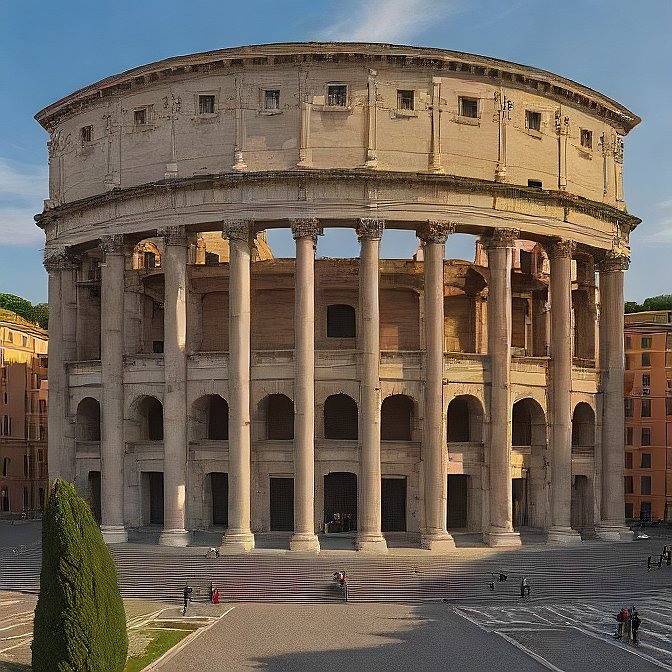
Rome is not merely the capital of Italy; it is also the source of a legacy, without which the modern world would be different. Starting with the law, still familiar today to lawyers in the modern world, the legal codes of the ancient Romans, to huge basilicas whose architecture still dominates the religious consciousness of many people worldwide, to roads and aqueducts, and marvels of engineering that gave birth to modern infrastructure, everywhere one can see the imprint of Rome.
It does have an impact on the area of art, architecture, and political philosophy, and its impact has echoed over the annals of history. Renaissance masters like Michelangelo and Raphael were inspired by the grandeur of the city of Rome, and the shattered walls of the Colosseum and Roman Forum still call scholars and foreign visitors to stare at the past as one man in the awe of a civilization that transfigured the ideas of empire building.
But Rome is not a museum but a city intoxicated with passion, politics, and pulsating life of the street. It was and is a capital of daring identity, dauntless expression, and indomitable cultural strength.
The Cradle of Civilization: Rome’s Unmatched Historical Power
Rome established the precedence of ruling a world a long time before modern capitals were created. Being the center of the Roman Empire, it inspired the development of the legal norms, political pattern, and concept of the infrastructure, which still governs our societies.
Ranging from the concept of a republic and a senate, to road-building, aqueducts, and urban planning, old Rome inspired to gave birth to a great part of Western civilization. Modern law, science, and medicine still speak today of Latin, which was the language of the empire.
The spectators are still able to stroll around the Colosseum, which used to be a realm of the gladiators and emperors, and experience the burden of the show and politics. The ancient Roman Forum, which is a busy market and political hub, is in close proximity and stands as a bright reminder of the skill of Rome in governing and Palatine, where, legend says, Romulus made the city stand at once the myth and monument of the eternal identity of Rome.
The legacy of Rome has not been locked in the pages of history books; it is in textures, engraved into stone, under your feet, and all around.
Vatican City: Spiritual Center of the Catholic World
It is not possible to just walk off a street in a different part of the world and get into another sovereign state, but in Rome, that is possible. The tiny landlocked state of the Vatican, the tiny independent state on earth, the spiritual hub of a billion Catholics in the world, is located in the heart of the capital.
Soaked in history, this sacred compound includes one of the masterpieces of Renaissance architecture (St. Peter Basilica) and the Sistine Chapel, whose frescoes, in the presence of Michelangelo, leave the visitors at a loss for words. Other than being beautiful, the Vatican is also a world player in terms of territory, be it religiously, diplomatically, or even culturally.
However, the interconnection of Rome to the Vatican is more than religious. It is also one of the cultural capitals, where centuries of treasured art and manuscripts, as well as philosophical heritage, are preserved. And whether you are a believer, a fan of art, or a history buff, the Vatican can be one of the most rewarded spiritual and even visual experiences on the planet.
Here in this one district, Rome combines the inspiration of the god and the genius of the artist–testimony once more that no other city bears so much that is solid on earth, and so much that is heavy in spirit.
A Living Museum: Art, Architecture, and Awe at Every Turn
In Rome, there is a juxtaposition of art and museums do not no separation between them, but instead on the streets that are made of cobblestones and even over fountains, and on each corner. The moment you arrive there, the city shows itself as a museum of life where the stratifications of Renaissance beauty, Baroque beauty, and classical beauty cohere to form an incredible whole.
One of the still untouched structures, still almost two thousand years old and a masterpiece of architecture in itself, is the Pantheon, which is a witness to the greatness of ancient Rome. Give a coin a toss in the baroque masterpiece, the Trevi Fountain, with Neptune driving his chariot through an uneven stream of mythology and marble. Mirror Piazza Navona was built by using the stadium of the Romans, or rather built over the Roman Stadium, and is actually an ensemble of fountains carved by Bernini and structures frescoed.
Naturally, nothing can be said of Rome without mentioning Michelangelo and Raphael, who contributed to decorating churches, palaces, and ceilings in Rome.
Rome reminds you, as you walk through it, that you are not there to preserve history; you are living it as you walk through it. Here, the beauty is not the exception, but the standard.
Check Out: Paris: The Unforgettable Powerhouse of Culture, Elegance, and Romance.
Political Pulse: Rome as the Heart of Italian Government
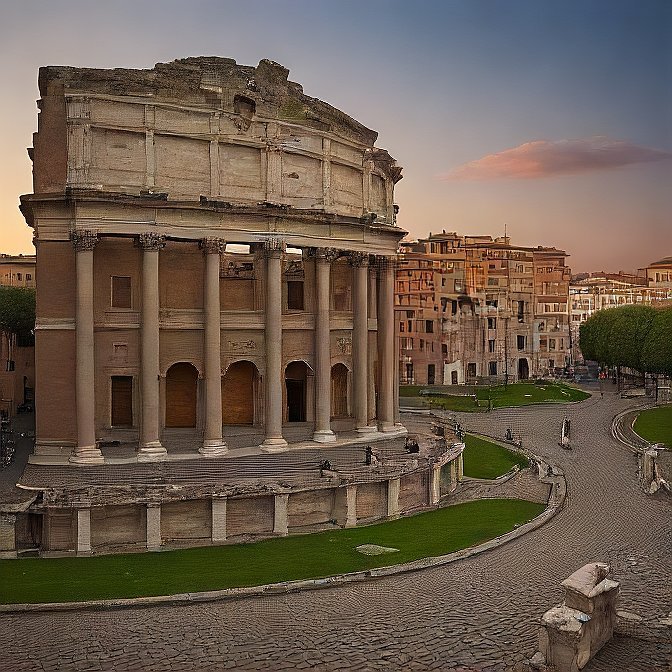
Other than its art and ruins, Rome is a city of decision, diplomacy, and democratic control. Being the capital of Italy, it plays the seat of the Italian Parliament, the Presidential Palace (Quirinale), and almost all the main government ministries. From global summit conferences to national policy discussions, the focus of the modern future of Italy is contouring itself in the city of Rome.
It is the splendor of the governmental buildings that can be paralleled with a politically engaged mass. The city controlled by the Left is regularly animated by protests, marches, and civic gatherings with a long tradition of political expression that began in the Roman Republic.
Italy not only rules in Rome, but it is also where the Italian identity is defended, discussed, and recreated. Rome has all the historical heaviness, a lot of diplomacy, and it is the beating heart of the nation as well as an important actor on the European scene.
Roman Flavor: Culinary Traditions with Bold Personality
Food in Rome is not food, it is a sense of who you are, a source of pride, and a hard regional tradition. Each and every dish shares epicurean adventures of infusing exotic flavors, using minimal ingredients, and hundreds of years of being perfected in the art of cooking and culture.
Split pig organs or offal, lightly bready, moreish Roman fried artichokes, silky Roman versions of carbonara, no cream involved, but enhanced by guanciale and pecorino, and its sharp tomato and cured pork intensity, amatriciana. Have a bite of supplie, fried rice balls stuffed with mozzarella, or take a bite out of a pizza, Roman style, with its super thin, crunchy crust.
You can go aimlessly inside Campo de Fiori, the most ancient market of Rome, or go to Trastevere, a pretty district, where you can visit trattorias with lots of laughs, wine, and ancient recipes. There is food that could satisfy everyone, the street food, as well as multiple-course festivals that someone could attend in Rome.
In this case, each bite is a relation-not just to a culture but to relatives and to the love that never dies till Roman people.
Modern Rome: Fashion, Film, and Italian Cool
Rome is vibrant today, although its history is mythical, as the city is a symbol of style, cinematography, and artistic alacrity. There is a certain effortless glamour to the place, and the city seems to be pulsing with it as something that is distinctly Roman, where the classic tailored collides with streetwise, and where an ancient setting is decorated by futuristic design.
In Italy, CinecittA Studios, where Fellini and Sophia Loren filmed, still remains the filming grounds of the Venice state. Rome is still home to international moviemakers and artists who are attracted by the endless beauty and dramatic atmosphere of the city. Festivals such as the Rome Film Fest do this in style.
Fashion-wise, Rome can stand up against Milan, as luxury shops and leather workshops, as well as artisan fashion designers, contribute to a more sophisticated, and at times even more daring, Italian style. A city that exists where tradition and trend colossus run side-by-side-where the past and the present do not merely exist, they influence one another.
Timeless Energy: Why Rome Keeps Inspiring the World
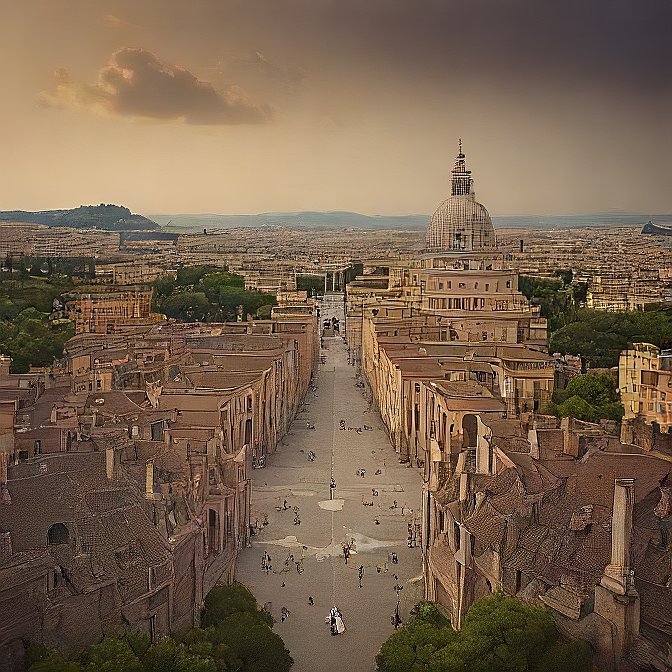
Rome is ancient to the very guts. Rome does not mind being ancient. It exists vibrantly in a way that has not beaten off the attention of international artists, entrepreneurs, scholars, and seekers. The cobblestone streets are noisy with the wind of conversation and espresso combined with a Vespa engine. Student neighbourhoods like San Lorenzo are young, and Testaccio and Pigneto art scenes are always re-conceptualizing themselves.
Rome does not exist in amber; it is instead an ongoing evolution, responding to each new voice who treads its streets. Tourists are attracted here not only to look at history but to be part of history, which is more of a living tradition.
Rome’s secret? It can never be out of date. It re-evaluates itself with every era as to what global capital is. And in the process, it keeps on inspiring the world.
Conclusion
The place that is Rome goes beyond sightseeing to being stratified within itself and talking across the centuries. Ranging between the steps of the emperors and the brushstrokes of the Renaissance masters, papal decrees, and the daily espresso routine at the street level, the city is stirring with energy that few cities may be able to possess on the globe.
It is the city of the fusion of the past, of the power, and of the art, the place that gave something to the world and that left imprints on it not only in the Italian culture, but also in the world culture, state, religion, and design. Rome is permanently intriguing in the sense that it can unite the permanency and the passion, the legacy and the vitality.
Old ruins, Baroque cathedrals, a political intrigue, or carbonara in an ancient trattoria, more aged than your nation itself, the city called Rome has something transformative in it, which will pull you. There are emperors born and artists and even popes and politicians; it is here in Rome that greatness is nurtured. Prepare your own trip to history.
For more info: Click Here.
FAQs
How long will my visit to the major attractions in Rome take?
3-5 days is simply the ideal choice to visit the most famous attractions of this visit, which are the Colosseum, Vatican City, Pantheon, Trevi Fountain, and the Roman Forum. It will enable a visit to prominent neighborhoods, the food scene, and immersing oneself in the city feel without the feeling of being under pressure.
When is the most appropriate time of year to visit?
Rome is reported to be a terrific place to travel to, especially during the spring (March, April, and November) and during the fall (October and November), as the weather is very fine, crowds are not too thick, and the city is highly vibrant with local fairs, outdoor meals, and foot attractions.
Is Rome a city-friendly city to pedestrians?
Absolutely. Rome could be said to be a very walkable city, especially in the old center where the majority of the buildings are located. What it does is, it presents to you an opportunity to discover positive things, that is, by going and walking, learning about piazzas, fountains, and storefronts, created by craftspeople you would have paid no attention to. And you remember to take something comfortable to wear–cobblestones are wonderful, so very brutal!