Table of Contents
Introduction: Moscow—Where Power, Culture, and Legacy Converge
Moscow has not only been the capital but also the spiritual and geopolitical center of the Russian Federation for a few centuries. Politically, it draws the world to be focused on it since it is the place where power lies with the Kremlin and other major state organs being located there. Its effect, however, is not limited to the political domain.
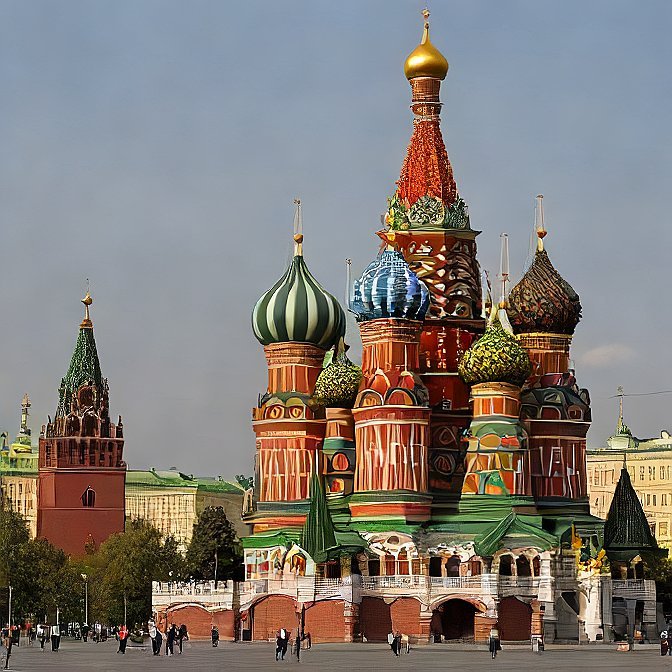
Moscow as a culture is one with strength. It gave birth to such literary giants as Tolstoy and Dostoevsky, and it harbors centuries-old art, architecture, and music; it offers performances in the Bolshoi theatre which are world-renowned, and the spirit of revolution and the glory of the Empire.
It has always been the epicentre of Russian power, and it has been so through what it confronted in the form of invasion, progressive tension, world wars, and ideological upheavals. Moscow has passed the test of fire (when Napoleon retreated) and the test of time (all through the tense Cold War).
Now, it is an enormous, constantly developing city: modern skyscrapers are constructed in the neighborhood of cathedrals with a dome shaped as an onion, and the present and the future come face to face in each metro station, avenue, and square.
This blog will show you a tour of the prevailing past of Moscow, its vibrant presence, and what makes it the place that makes Russia unstoppable.
Check Out: Stockholm: The Unstoppable Capital of Sweden’s Cultural and Economic Might.
1. A Powerhouse Through the Ages: Moscow’s Historical Might
Not many cities have impacted the direction of a nation as it is the case with Moscow has. The story of unremitting change and power is reflected in its emergence as a small European principality in the 12th century and its elevation to the status of the most powerful imperial and ideological capital of the largest nation in the world.
Moscow was formerly outclassed as a political and economic powerhouse because of older Russian cities such as Kiev and Novgorod, but this was due to a matter of strategic location, as it was placed at the trade routes and rivers. In the 15th century, it became the base of the Russian Orthodox Church and the Grand Duchy of Moscow, and therefore its power was greater than ever because it was the center of a growing empire.
It was during the invasion of Napoleon in the 19th century that the historic role of Moscow became especially notable in the resistance of Russia. Instead of giving up the city, the Russians burned it instead, and the French army was reduced to the ruinous rout–one of the events in history that made European history.
In World War II, decades later, Moscow resisted the Nazi forces during a severe winter of the year 1941 and became a remembrance of the Soviet stand. This defense by the city became the turning point of the war and made it be branded as the Hero City.
At the moment of the Cold War, Moscow was the seat of the communist ideology. The capital city was the place where armies marched holding constant military parades, power and political games, and propaganda before the entire globe, and this was a phenomenon of an era that was painted by the Red Square appertaining to the Mausoleum of Lenin.
Through the red banners and the tsarist crowns, Moscow remains a constant one, a city whose history can not be isolated from the survival and strength of Russia.
Moscow Today: A Modern Giant on the Global Stage
It is a rapidly developing metropolis and the future of Russia, yet modern Moscow preserves all the features of the golden times of its centuries-long imperial history as well as its domineering role in the present. It has become one of the most powerful cities in the world today, not merely as a political city, but also as an economic, technological, and social center.
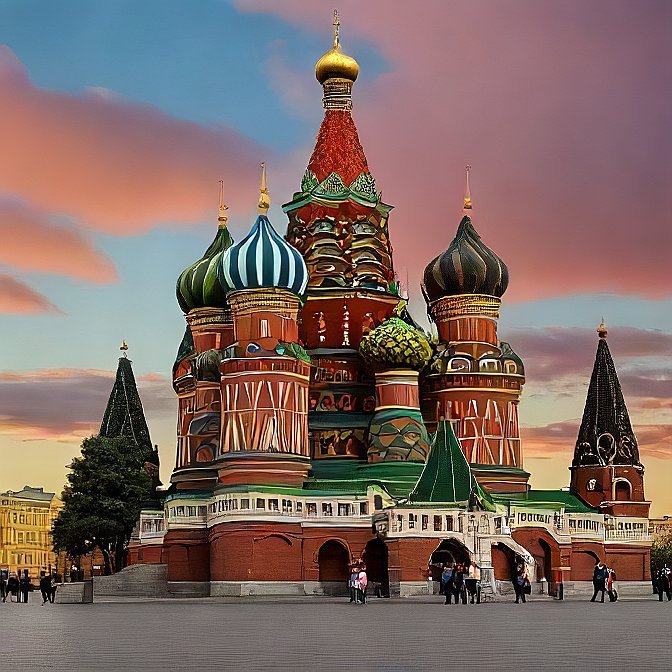
Being the financial and industrial center of Russia, Moscow hosts such giant companies in the field of energy, finance, and state-owned enterprises as major energy companies and banking institutions that form the national economy. The city is characterized by the futuristic skyscrapers of Moscow City, which is the rapidly developing international business district of the capital, a symbol of its transformation into a global business and modern innovations.
Politically, Moscow is the administrative centre of Russia and there, one will find the Kremlin, ministries of the federal power, and the headquarters of diplomacy. This is not only strategically important at the global level, but the outcomes of the decisions made here resonate over continents.
In the meantime, the innovation is booming. Silicon Valley tech hubs, venture capital institutions, and university research centers are heating up a quiet revolution in the fields of AI to biotech. The state of improvements is brought to public infrastructure as well-the metro system of Moscow, being one of the most efficient and beautiful in the world, has sprawled into new suburbs and urban districts.
Regardless of the world tensions and domestic uncertainty, Moscow still remains an embodiment of grandiosity, modernization, and control, trying to hold the Russian Federation with the same vigor that has shaped it throughout the centuries.
Icons of Strength: Landmarks That Define Moscow
It not only has a reputation as a well-known skyline of Moscow, but also as a symbolic one. The architecture it exhibits has the history of success, religion, rebellion, and patriotism. These monuments do not only mean a tourist attraction, but also an immortal spirit of them and the image of Moscow.
- The Kremlin & Red Square
- It is more than just that, but rather the soul of political power in Moscow, as the Kremlin is an ancient fort and the residence of the supreme leaders in Russia. The Red Square is just adjacent to the Kremlin, and it was the coronation area, where the parade and protests took place. On the whole, all of them help to develop the most recognizable and symbolically complex place of the country.
- Saint Basil’s Cathedral
- Such a marvel of architecture, as it was built under the reign of Ivan the Terrible in the 16th century, is not only a picture on a postcard. A golden dome of an onion and a ruthless appearance make it not only an epitome of struggle and loyalty of the capital of Moscow, but also a sign that is a blend of religious art and imperial ambitions.
- Victory Park & The Museum of the Great Patriotic War
- These monuments are a remembrance of the victory of the Soviet Union during World War II and are part of the national memory. Victory Park, which has an impressive obelisk and petroleum flame, is devoted to the memory of millions of people who gave their lives. The museum that goes with it retains the strong accounts of survival through the dark days of Moscow.
All these monuments are not just stone and metal but the symbols of power and memory of Moscow and national pride of the country.
Beyond the Facade: The Local Life of Moscow
Against the backdrop of things like the imposing institutions and the magnificent landmarks, Moscow is a city with a story to tell in its daily experiences. And to get an idea of what everyday life in Moscow is, turn off Red Square and descend into the neighborhoods where the true Russian capital is alive.
Muscovites are very strong, and they manage to combine hustling life in the big city with a rich history. The million residents of Moscow are part of what the city is all about, whether a taxi driver or a poet, a manufacturer or a tech entrepreneur.
The Moscow Metro, famous not only because of its speed and perfect work but also because of its palace-like stations, is a very important part of everyday life in the city. The trains are running just like clockwork and take people across this enormous city-land-scapes-sight that are the historic city center to the outer exurbs.
You can see residential buildings in a mixture of Soviet blocks of flats, new high-rises, intimate cafes, and local bakeries in such areas as Kitay-Gorod and Arbat, or Sokolniki. Street food and fresh goods are in season, along with the warm interaction in the markets. The food culture of the city is a delicious scramble of conservative and inventive traditions, and it exists coherently: blini stands and Georgian bakeries, and vegan trucks on the same street.
Youth subcultures bring color and life to the city: there are indie music scenes, graffiti collectives, digital artists, and others that make up modern, creative Moscow that has long defeated the worn-out stereotypes.
Moscow’s Cultural Pulse: Art, Opera, and Revolution
Moscow is the cultural capital of Russia and has changed and developed from a Tsarist palace into Soviet innovation and postmodern experimentation, all the time remaining faithful to its artistic heritage.
The name of the Bolshoi Theatre, which is associated with the best ballet and opera performances in the world, is still among the most authoritative of the theaters of the present-day world. The productions it makes are not mere entertainment; they are cultural rituals.
In the case of visual art, there are the global masterpieces of the Pushkin State Museum of Fine Arts, and the Tretyakov Gallery presents the best collection of Russian art, beginning with Orthodox icons and concluding with 20th-century realism.
Moscow of today is also faced with confrontation as well as reinterpretation of Soviet heritage. There is Soviet-era art and architecture throughout the city, reused, recontextualized, or transformed into installations and underground galleries, new Russian expressionism, and so on. Such venues as Winzavod and the Garage Museum of Contemporary Art present sharp contrasts to classical venues, with young, experimental voices experimenting on the edge.
With a changing cultural pulse that runs deep in daily life, there are festivals, literary gatherings, electronic-music get-togethers in former factories, and dinners out on the town. It is a city that once heard the echo of a revolution, yet presently, it is culture and art that are at the forefront.
Hidden Corners and Untold Stories of Moscow
Moscow is really bigger than it seems. Wordless and magical spaces, poetic locations, and sensational memories hide behind tourist maps and Instagram photos.
Begin with Izmailovo, a colorful village-like complex, famous for its antique market, local crafts, and folk architecture. It is a good spot to buy hand-carved chess pieces, or soviet memorabilia, otherwise a delightful cup of kvass.
The metro art in Moscow is that the metro stations are museums that are underground. Such stations as Komsomolskaya or Mayakovskaya are decorated with chandeliers, mosaics, and marble columns, each of them being a dramatic story of Soviet ambition.
Novodevichy Cemetery can provide a history walk in case one needs quiet solitude. There are only the names of the writers, cosmonauts, and political leaders who are buried here, and their stories are faded in the sculptures and inscriptions that strike a haunting beauty.
Tales of heroism in the Siege of Moscow (World War II), and not always told, are immortalized in monuments, family reminiscences, as well as in the city itself. Finding out those less popular layers is the way to get closer to the soul of Moscow.
Visiting Moscow: What Travelers Should Know
Safety: The city of Moscow is, as a whole, safe to visit, and it is not a problem to visit the most touristic locations. Travel in obvious taxis or use ride services, do not go out to demonstrations, and understand the law.
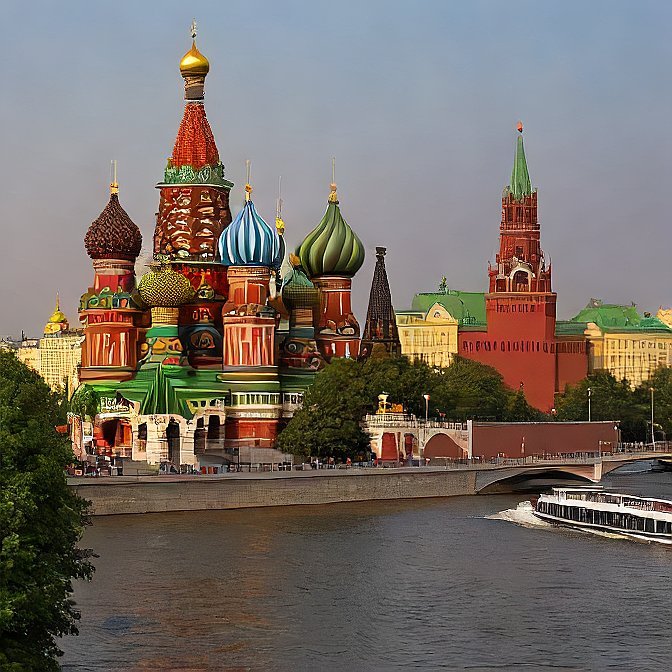
Essential Travel Tips for Visiting Moscow:
- Etiquette & Customs: The niceness can take you a long way. In churches, dress modestly and interact with the locals politely; sometimes a few words of Russian can be a very long way.
- Language: The major language is Russian, with English only on a small scale in tourist regions. Handy things are apps such as Google Translate or offline phrasebooks.
- Transportation: The Moscow Metro becomes a fast, cheap, and breathtaking means of transportation. Buy a Troika Card at your convenience.
- Visa: The majority of the visitors require a visa to enter Russia. Apply early and do not forget to have a formal invitation to a hotel or host.
- Peak Season: Summer (June-August) is the high season, with the price being the highest. Spring (April-May) and autumn (September-October) are the mild weather with fewer crowds and have beautiful seasonal scenery.
- Budgeting: Moscow has everything available: luxurious, cheap. Museums, street food, and transportation are quite cheap. Make arrangements in advance for exchange rates as well as cash consumption.
Moscow is not a place; this is an impression of greatness, soul, and contrast. It is forgettable with an improper attitude and training.
Conclusion: Moscow’s Spirit Isn’t Just Surviving—It’s Thriving
Moscow has always been on the high, not only as the capital of political strength, but also as the core of cultural, historic, and emotional strength of Russia. There is Kremlin glare and street market dirt, revolutionary art and holy tradition; the presence of Moscow is eminent.
It is the city of contrasts–intimate and vigorous, old and modern, majestic and so very human. Whereas geopolitics usually leaves a mark on Moscow headlines, people who explore the city find something much more interesting: a city that beats with innovative zeal, unconditional national pride, and a spiraling need to transform and surprise.
Moved by its imperial history, the Soviet heritage, its rebirth as a cultural capital, or just its city power, Moscow is not a place to visit, but rather an experience.
For more info: Click Here.
FAQs: All About Moscow
Can tourists get safe Moscow in 2025?
Yes, the majority of Moscow is regarded as a safe zone for tourists in 2025. As in any other big city, it will be a good idea to be watchful and keep away as much as possible, political rallies, and travel by registered means of transportation. Tourist infrastructure is better, and the police are present in some of the strategic areas.
What is the Moscow language?
Moscow is a city of Russian speakers. Though a few of the hotels, museums, and restaurants are carried out in English, especially in the urban centre, this is not a common language in the other areas. A little bit of the Russian language or a translator application won’t do any harm in this.
How is Moscow different from the other Russian cities?
Moscow is the largest, urban dynamic, and most globalized city in Russia. It is the political, economic, and cultural centre of the state. Unlike cities like St. Petersburg that represent the luxury and the European spirit, Moscow is all about the power, diversity, and energy; it is all about the strength and will of the Russian world itself.