Table of Contents
Introduction
Madrid is not only the capital city but also a true reflection of the soul of Spain. Madrid is strained and culturally rich, and restless in every way. It is really the hub of the past, the present, and the future of Spain. Its broad streets are alive with politics, yet its fine deep gullies are all laughter and flamenco, and with the smell of frying tapas.
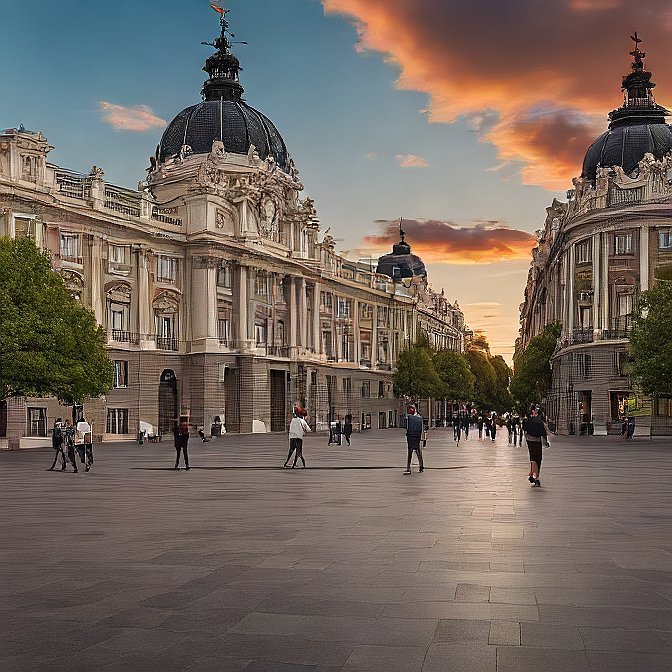
Unlike other capitals, which are mere containers of power, Madrid is the throbbing centre of Spain, intolerant, young, as well as restless with the spectre of tradition as much as of reform. It is the place where monarchy crashes with democracy, and the works of art crafted by century-old artists can be spotted even a few blocks away from the galleries where their innovative artwork is being painted.
The permeation of the impact is deepened by the walk around Madrid: behind walls of the parliaments, halls of the Prado Museum, in the kitchens of old-time taverns, and in the catwalks of the new fashion. The city does not simply imagine Spanish identity, but it also creates it. It is the city, the institutions that shape the identity and re-shape it, both in the political arena, gastronomic, and expressive art.
The Pride in Madrid is quiet; it is performed. It is preached above the House tops, it is sung in the streets, it is written of great characters upon the walls, and flown in the air till night. Madrid means Spain, there cannot be two other ways of sharing what is Spain than reliving Madrid once again without any program in the near future, but as a power that continues to make the greatness of a nation.
Royal Prestige: Where Monarchy and Modern State Converge
And hardly any city more politely balances the scales between the royal court and urbanity than Madrid. This is at the center of this legacy: Royal Palace (Palacio Real) is the largest functioning royal palace in Europe. The palace is used as a ceremonial centre of national celebrations, royal receptions, and official visits, although the Spanish royal family does not reside there.
The palace is surrounded by majestic gardens, large statues, and ancient buildings, where the palace is looking over the beautiful Plaza de Oriente square, all of which are the memories of the imperial past of Spain. Its low staircases, frescoed ceilings, and armor halls speak of its past as a nation that once was the head of a world empire.
Madrid is closely linked with royalty as a remnant of its past glory, but also an inbuilt part of the city. The royal flavor of Spain is, in this case, ideally combined with the modern statehood, which provides an occasion for an outsider to travel in a time when tradition was something worth applause.
Political Powerhouse: Madrid as Spain’s Governmental Engine
Madrid is the hub of Spanish democracy, besides being a city of royal glitz. All the main ministries and governmental agencies, as well as the Spanish Parliament (Cortes Generales) and the Official residence of the Prime Minister (Palacio de la Moncloa), can also be found in the city.
This power concentration not only turns Madrid into an administrative centre of Spain, but also into a centre of political life. The city has become an arena of national cog and where all the thinking of the people who live is reflected in the mass protests.
Walk around the Plaza de las Cortes or cross the world-famous Puerta del Sol, and you will sense the beat of society that is proud of its world. Madrid not only dominates Spain, rather it also relies on the way that people can dominate Madrid.
Madrid’s Golden Triangle of Art and Culture
Madrid is a glaring city, and art is the soul of any city. Perhaps there can be no better absolute certain testimony to this than its Golden Triangle of Art, which so small a walk will carry you, that three of the greatest museums of the world are not a minute more than a of minutes distant.
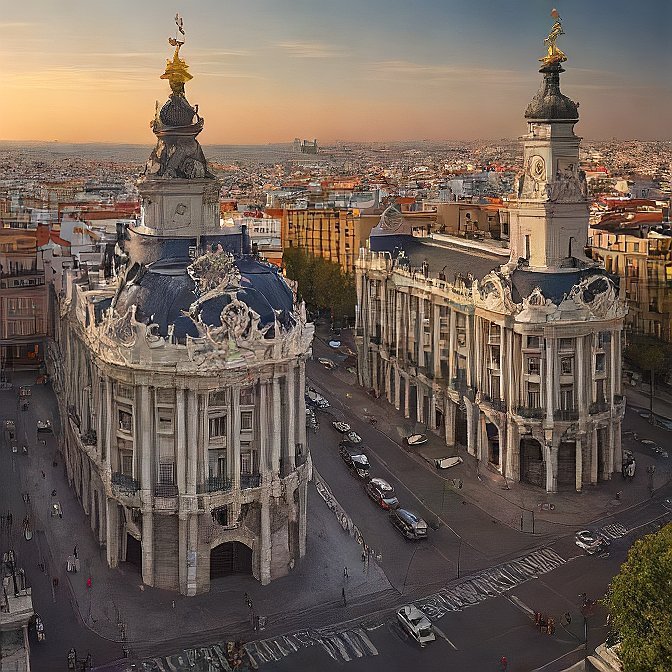
The Prado Museum is where paintings of Velázquez, Goya, and Rubens are held, as they are ready to give a lifetime experience, such as having a nostalgic glance of the golden age of painting to have happened in Europe. The modern magnum opuses, including the picture of Guernica by Picasso that is regarded as an epitome of the political art of the 20th century, are only stored on the back side of the Reina Sofia Museum.
And finally, to complete the trinity, there will be the Thyssen-Bornemisza Museum, and this will become an exchangeable point between the classical and the modern work of art, since, besides its centuries-old collection, at least certain pieces of modern-day work can also be seen there.
When these two get together, they form a trend that reinstates Madrid as a global cultural capital. The imagination and the past collide in Madrid in order to empower every generation.
Neighborhood Soul: The Character Behind Madrid’s Charm
Kings and queens are not the real heartbeat of Madrid, but barrios, or colorful neighborhoods, as they have their specific style and twist. And between the bohemian of Malasa and the retro of La Latina, up to the hip of Chueca, the neighbourhoods of the city vary as being welcoming.
Here, individuals spend their lives in cafes, the streets, and sun-filled squares. The tapes come to the table slowly, the laughters roll down the streets of the tabernas, and the neighbours walk by and complain to each other as family members. The madrileños (locals) are hospitable; the hospitality is not only the heat of life but the national pride that you have to walk around.
The component of tradition and trend intersect here, intersecting as the structures patched up in the 18th century have become the home of the indie shops, and the markets that had earlier provided the atmosphere have received a new flavor. One can never know Madrid without experiencing the pulse of the streets because it is at the barrios where one can feel the pulse of Madrid best.
Check Out: Warsaw: The Bold Capital that Commands Attention in Eastern Europe.
A Culinary Capital: Where Tradition Meets Innovation
The food in Madrid is awash with the thick culture of Spanish culture, which is spicy, rich, and it is not afraid to be bold. The city serves its cuisine with unrepressible excitement: there are unpretentious tapas restaurants located between small streets and gastronomic innovations of the Michelin-starred restaurants.
Go traditional and start with cocido madrileo, a hearty chickpea broth to wake up the soul, or reach the sweet end with churros con chocolate, a sweet sugary snack sold in the old-style chocolate stores, including San Gin. Go through the most popular Mercado de San Miguel, where retro snacks are complemented with international perspectives in an exciting gastronomic adventure.
However, there is nothing that could prevent Madrid from maintaining the old custom in the domain of gastronomy, but redefining it. The Spanish tradition is also being introduced in another generation of cooks and restaurant owners, and with international influences, the culinary scene has got a particular identity of its own, and also of a global restaurant.
People of Madrid are not fed by food; eating is a cultural phenomenon, a place to express, and a ritual to enjoy.
Madrid After Dark: Energy, Elegance, and Endless Nights
The sun goes down on the roofs and then Madrid turns also an active, musical, magnetic. It is a type of city that has no nightlife, but a city that produces the nightlife. The rhythms of flamenco play in small, cozy tablaos, the cocktails are mixed in the bars on the rooftops with a panoramic view, and the backrooms of the taverns located in the side streets are flooded with guitar and laughter.
In the Spanish equivalent of Broadway, the Up Gran Via, the theater is thrilling people with music, drama, and cinematic flair. The barrios, which include Lavapies and Malasaia, are always full of places where people flock and experience every hour being celebrated.
The one best thing about Madrid is the shift between high profile and reality. Sure, you can have a vermouth in a 100-year-old bar, you can dance yourself silly till eight a.m. in a modern, trendy disco, but there is just no attitude, just that you are enjoying this moment at this moment.
The scene at night in Madrid is not a bracket: it is an extension of the performance of life. It is a sleepless city, not a party city, because no one sleeps there, but because people live there too much.
Green Heart of the Capital: Parks, Plazas, and Open-Air Life
Detracted with the mix of politics and art, and energy, Madrid is a breath of clean air, in a not-so-literal sense of this expression. It is a place with big parks and peaceful plazas where people living in the city and visitors can obtain a pinch of nature even in the center of the city.
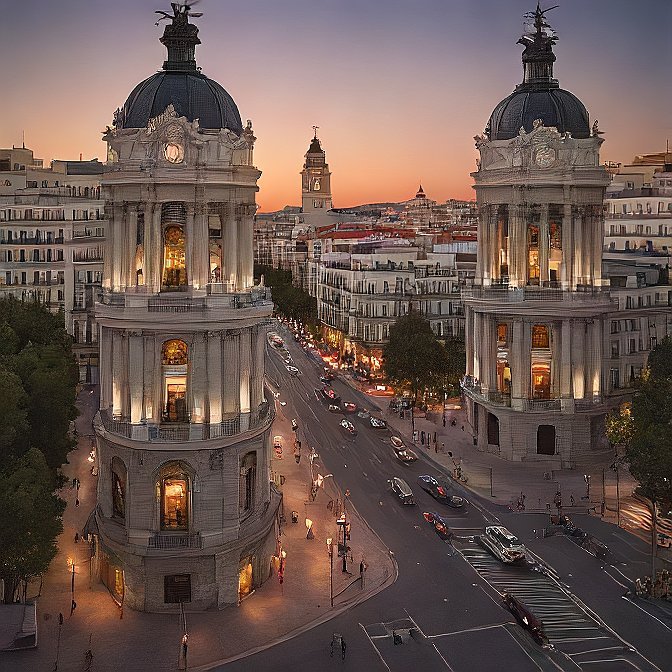
At the center of all is the El Retiro Park, which was once a royal retreat but is now a UNESCO World Heritage site with tree-lined walks, paddle boats, and marble sculptures to spend some hours in. But there is more, there is the huge Casa de Campo, the woods, the lake, and even a zoo; an outdoor activity for sport lovers, families, and even a daydreamer.
The Manzanares River contains a recreated greenbelt, the Madrid Rio, in which citizens jog, bike, and have picnics as they enjoy the view of the urban landscapes.
Movement and momentum are also present where there is traffic and impetus. These are green spaces, and these green spaces lend a proportionate amount that the life of Madrid also lies in the green areas; that the life of the city is not only on the street, but the life of the city is also in the green emptiness.
Conclusion: Madrid Is Spain—Fierce, Passionate, and Unforgettable
To go to Madrid is not the point: the point is to announce. The city, whose life is given to contrast and self-confidence, where centuries-old tradition and the unconditional modernity meet. It is the capital of Spanish politics, a blank slate of art, and a culinary and cultural orgy.
There is power and poetry. The majesty of royals seeps onto the pages. In a beat, there are world-class museums that line up with graffiti, life-filled alleys. The social, cultural, and artistic identity of Madrid is so political that the city of Madrid is not a city that you visit, but you experience.
It is not a wonder that to date, Madrid continues to stir the interest of thinkers, artists, and adventurers around the globe. Each new visit lets you not only learn about its history, but you also become a part of history yourself.
Discover the city, the past, the present, and the soul of Spain- this is Madrid.
For more info: Click Here.
FAQs
Q1: What is the number of days that are ideal to visit Madrid?
3 to 5 days will be just right to have a holistic experience. It will provide one with a time to see the most desirable spots in the city, like the Prado Museum, Royal Palace, and Retiro Park, but also time to see local areas, food, and fun, and lots of time to do leisurely stuff.
Q2: When is the most appropriate time to visit Madrid?
As far as the most suitable Madrid time to travel is concerned, it should refer to both spring (April-June) and fall (September-October). Weather conditions are pleasant, enough people are not too many people, and there is a series of entertaining outdoor activities, respectable cultural events, and so on in the city.
Q3: Is Madrid good to visit for a first-time Spanish traveler?
Absolutely. Madrid serves as a great jumping-off point in case one is a newcomer in Spain. Not only is it historically gifted, convenient, and pleasant to live in, but it is literally in the middle of everything, so that one can reach any corner of the country through the high-speed train.