Table of Contents
Introduction: Why Budapest Steals the Spotlight in European Travel
When we wish to say all of Europe, there are not so many cities like Budapest in their charm, their depth, and their beauty. Located in the glittering River Danube and being the capital city of Hungary, it may offer the greatest combination of ancient world charm and a contemporary, vibrant city situated on a riverfront. There is too much to find in Budapest, too much to enjoy, too much to gain experience out of, to both inhale and sore in its architecture, its nightlife, even thermal baths with international fame; this is the city that leaves an impression and unfolds its secrets on each of the corners.
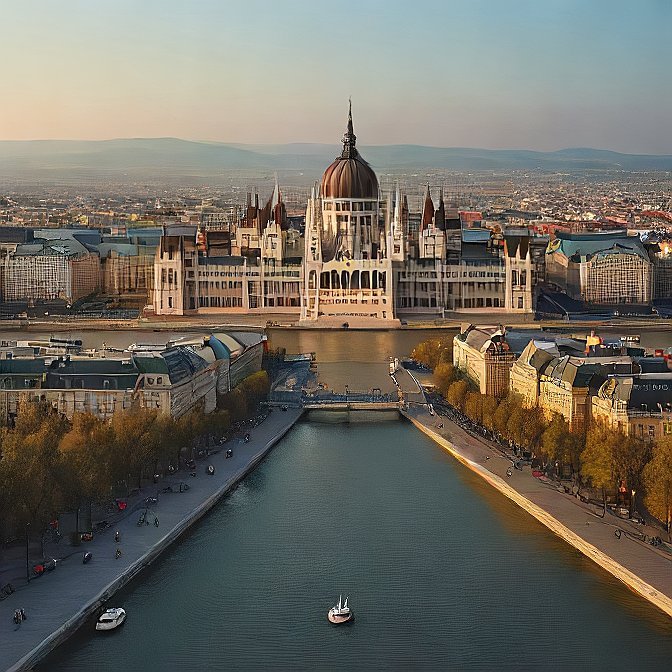
The part that makes Budapest really unique is that it follows through with history and culture. You will stroll through cobblestone roads with centuries-old architecture, and the next time you will fall into an offbeat ruin bar or a modern art gallery. This place is like a good story to be shared, whether you are bathing in a spa in a 16th-century building, visiting the cathedrals in Gothic architectural design, or taking a cruise on a river with the scenery.
It is also one of the reasons why travelers are in love with this Hungarian gem since it is affordable. Budapest is truly worth spending money and it is a luxury when compared to other big cities of Europe.
Budapest is not a beautiful European capital, but an experience that you will remember. After sensing its energy, sampling its cuisine, and shaking hands with friendly people, you would know right away why this city has stolen the hearts of many.
The Danube River: Where Romance Meets Breathtaking Views
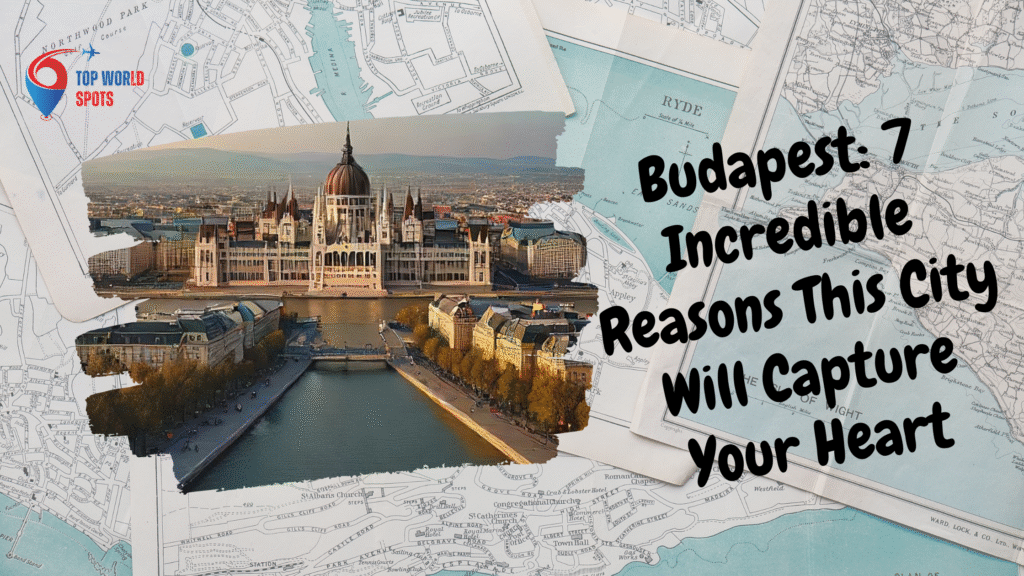
The regal river Danube is not only one of the sites in the city of Budapest, but it is a source of life to the city. The river forms two halves (Buda and Pest) of the capital and provides a decorative beauty in addition to historical value. Taking a walk along the banks, you will see how the Danube fills everyday situations with life, from sunny morning walks to the evening twinkling sunrays in the water.
Why not have a Danube river cruise as one of the best ways to enjoy the city before visiting it? You will be in the air of romance with the beautiful views of the Hungarian Parliament Building, the Buda Castle, and the nice bridges that connect both banks. The Chain Bridge is a very well-known construction in Budapest, which is lit up at night, leaving an unseen picture.
As you sit and drink coffee on a riverside promenade or even watch the sunset in the background of Castle Hill, a promise of magic awaits due to the Danube.
Thermal Baths and Spas: Soak Like a Hungarian Royal
There are so many hot springs under Budapest that it has been nicknamed the Spa Capital of the World, as they have been used to relax the human form since time immemorial. It is not only a sight to visit one of the numerous thermal baths in the city, but it is also a culture that has been deeply rooted in the local culture of the city.
The largest bathhouse, Szechenyi thermal bath near City Park, is constructed in large Neo-Baroque buildings, and has extensive outdoor swimming pools. To add more elegance, Gellert Baths and the Art Nouveau beauty can also be enjoyed and taken along with therapeutic waters. And to the inquiring minds of those who are in need of something both traditional and modern at the same time, Rudas Baths has a rooftop hot bathtub with a view over the river.
This too is considered convalescent mineral water, which is beneficial in joint pains, circulation, and relaxation. It is among the fun centers where the people of the area go to entertain themselves or to loiter around. In the meantime, each one of them must get a couple of hours of important relaxation to renew his/her powers, of course.
Bathing in the 1,000-year-old thermal baths, which are an experience in themselves marked with heritage and wellness in Budapest, is one of the most iconic ones there.
Jaw-Dropping Architecture That Tells a Thousand Stories
The architecture of the city of Budapest has a rich history and multiple domes, spires, and landmarks to mark the legendary history and creative stimulus of the city. Strolling in the city is similar to a flipbook of European design.
Located on a bank of the Danube, the Hungarian parliament building is a magnificent example of Gothic Revival, a magnificent construction. On the opposite side, we have the Fisherman Bastion, which gives a spectacular panorama of the city with its white-stone towers, which look like a set of fantasy motion pictures. Next, there is St. Stephen Basilica, and its dome so proud of the sky, where the holiest Hungarian relic is kept.
The Gothic, Baroque, and Art Nouveau mix in the city so perfectly that it is a delightful experience to look at the streets.
The architecture of Budapest is food to the eyes and soul, with each edifice having its tale: imperial prosperity, inventive fraternity.
Check Out: Oslo: The Vibrant Capital Reshaping Norway’s Legacy.
Ruin Bars and Vibrant Nightlife You’ll Never Forget
There is no other place that can spell the edgy, artistic nature of Budapest as much as the ruin bars of Budapest. They were born in the early 2000s in the Jewish Quarter, where these special watering holes were established within old buildings left undisturbed after WWII. They have not been restored as a whole, but their owners have appreciated their crumbling walls, mismatched furniture, and spaces covered with graffiti– they have managed to find a way to make decay art.
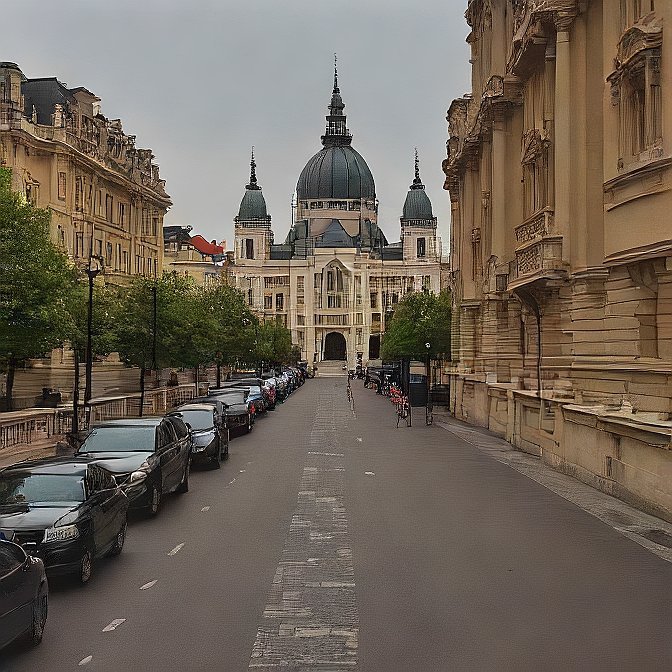
The first and most renowned ruin bar is Szimpla Kert, which is a sort of surrealistic maze of eclectic chambers, old bathtubs used as chairs, and random artistic interventions. These places are more than a mere drink; there are live music events, movie screenings, and local markets.
But Budapest’s nightlife doesn’t stop there. Whether you want a speakeasy-inspired cocktail lounge or a rooftop bar with views of the Danube, it will be available. Dance till dawn or enjoy wine with a view of a starry sky, Budapest provides some nightlife experiences that are completely wild and wonderful.
A Food Lover’s Paradise: Hungarian Flavors Done Right
Budapest is where you would be more than satisfied as a person who travels with his or her taste buds in the mouth. Hungarian food is an ample combination of flavorful and delicious dishes with spicy and pleasant textures, and Budapest is an ideal region where all these can be enjoyed.
Begin with the national dish, goulash, a tasty beef stew flavoured with paprika, which is usually accompanied by crusty bread. Try a steaming, greasy ll, a pan-fried flatbread which is usually smothered in sour cream and cheese, the most classic street food. You can also not forget about the sweet and curvy chimney cake (kurtoskalacs) with its frequent cinnamon, chocolate, or crushed nuts covering.
Besides the usual food, Budapest is a great food city that serves each and every taste. There are a great number of new restaurants rated with Michelin stars, innovative fusion restaurants, and cozy cafes along the boulevards and secret courtyards of the city.
To take a more realistic on-the-ground experience, visit the Great Market Hall. In this area, it is possible to taste local foods, buy spices, and witness the city in a daily routine of one of the oldest food markets.
Budget-Friendly Luxury: Experience More for Less
The best thing is that budget travelers can get one of the greatest surprises when visiting Budapest, as the city is very cheap, unlike other European capitals. It can be a real backpack trip or a luxurious getaway, and either way, you will be surprised at how far your money can go.
Facilities vary in prices without compromising on quality as far as rooms are concerned, ranging from luxurious hotels that have spa facilities to snug boutique hotels in the centre of the city. Eating out is also easily available, either a magnificent dining experience or a mouth-watering three-course meal in a local restaurant.
Public transportation is efficient, clean, and budget-friendly. With its web of trams, buses, and metro lines, this is an easy way to get around, and in parts (especially the yellow Tram 2, which runs along the Danube), rather picturesque, as you can imagine.
Budapest is a place to get what you want without feeling the pinch in your pocket, and still have the feel of the luxury treatment that does not come with a steep bill. It is a European destination where it is somehow possible to combine comfort, quality, and economy.
Rich History and Culture That Deeply Moves You
Budapest is more than a beautiful city because it contains a deep history with strong roots that the streets, monuments, and institutions reflect in this city. The city has been through invasions, revolutions, and tragedies in times of war, which have contributed to the development of the city in style and character.
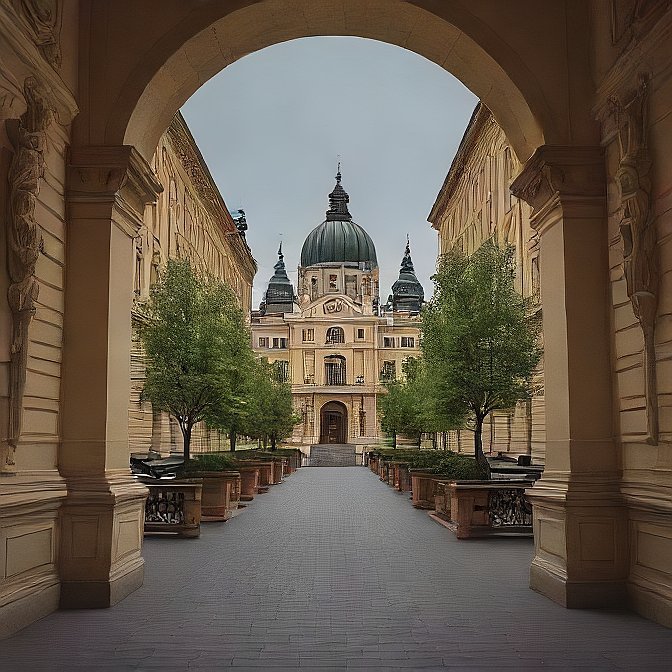
Devote some time to learn about the gloomy pages of this very city in the House of Terror, a scary museum describing life during the times of Nazi and Soviet rule. To obtain a focus on Hungarian history and arts, the extensive history of their culture can be followed through the centuries at the Hungarian National Museum.
History lives alongside celebration in Budapest. The city is the venue of folk festivals, open-air concerts, literature and opera shows, which all year long present the artistic soul of Hungary. Whether it is a conventional dance or modern-day theater, the cultural zeal here is revered and vibrant.
And, as a destination in which the visiting tourist will find more than a sightseeing stop, Budapest presents an opportunity to relate to the past, art, and a nation that has been able, both through success and misfortune, to maintain its history.
Conclusion: Budapest Is More Than a Destination—It’s a Feeling
Budapest has a kind of charm that is difficult to pull out of your memory. It is a little bit of old-fashioned, stylish beauty, a lot of culture, and authenticity. Be it due to the convivial steam of thermal baths, the racket of ruin bars, the dazzling views of the Danube, or architecturally striking beauty wrapped in history, each piece of this city seems to draw you in and leave you feeling something.
Not only the sights or the food or the affordability, but the fact that Budapest has something to experience that one does not forget long after the vacation is over, is the reason why tourists have fallen in love with this city. You are either a history buff, one in love, a foodie, or someone who just enjoys some wandering about, and you might think that this city has nothing to offer, but boy, you have not seen it yet.
For more info: Click Here.
FAQs About Visiting Budapest
Q1: What’s the best time to visit Budapest?
The best time to visit Budapest, Hungary, is recommended in spring (April to June) and early autumn (September to October). It is warm but not to the level when it is during the summer season, as it becomes sunny, and one can picture and also out there are things you went festival this, and at the same time not too hot.
Q2: Is Budapest safe for solo travelers?
Well, Budapest is a generally safe destination even when a person travels alone (even women). As with any large city, it is probably a good idea to watch your back and not wander into dark, overly late, otherwise, though, it is a friendly, police patrolled, and generally simple city to get around.
Q3: How many days should I spend in Budapest?
In Budapest, 3 to 4 days is the ideal way to obtain a balanced impression of the city. This will give you quite enough time to see the most interesting places, take a thermal bath, go on a river cruise, and get to feel what it is to be in the unusual neighbourhoods and affiliates the exceptional cuisine of the rarity.