Table of Contents
Introduction
When many individuals in the world hear about Baghdad, it is easier for a large number of them that what comes to their mind is nothing but a feeling of conflict, instability, or headlines that have war all over it. But with this kind of outlook, it does not talk about the kind of past, the kind of heritage, and the kind of unending spirit that a city, such as NYC, has. Baghdad was an ancient city, which previously was one of the intellectual and cultural centers of the Islamic world, a flow that was provided with human nature in the form of knowledge by the philosophers, scientists, writers, and artists, as well.
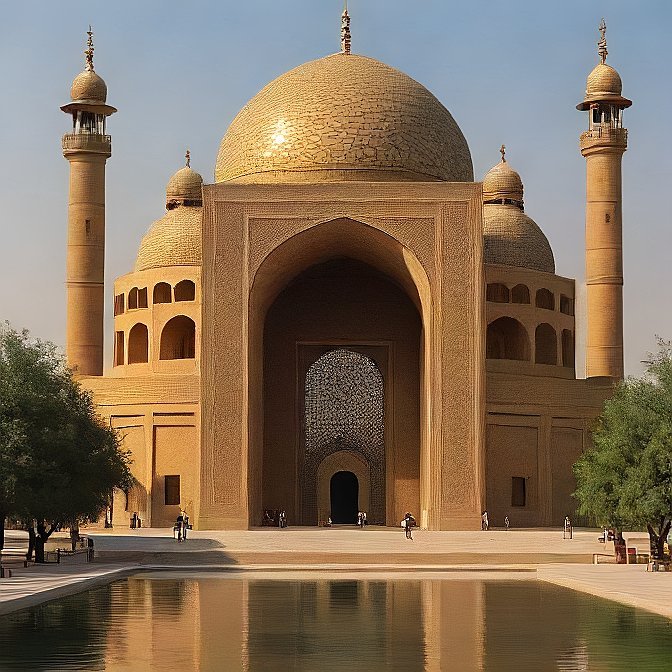
At its inception in 762 CE, Baghdad was considered a City of Peace under the rule of Abbasid Caliph Al-Mansur. Years go by, years go by, and during these centuries it carried out this name- in those days it was the Pearl of the Islamic Golden Age, with its legendary House of Wisdom, where were translated ancient texts and preserved, new discoveries were made in math, medicine, astronomy, and literature.
When Baghdad survives today, it is more than a survivor of decades of wars and chaos that have plagued it. It is a city on its move, rebuilding, reformulating, and reclaiming its status in the contemporary world. Whether it is the hectic street markets and street cafes on the riverside or book fairs and ancient ruins, the capital of Iraq will provide the foreign visitors with a complicated and living picture of Iraq: a country where hope, rather than headlines, presents their vision of life.
In this article, we bring you back to Baghdad. We are going to rediscover the city, its past, its present, and the stories that make it one of the most interesting cities in the Middle Eastern region.
A Glimpse into Baghdad’s Golden Past
Indeed, long before Baghdad was ever associated with war, it was at the centre of one of the most advanced epochs in human history, the Islamic Golden Age. Formed by Caliph Al-Mansur, who was an ideal planner in the 8th century, Baghdad city was neatly set up in a circular shape-prone to perfection and unity, and soon emerged as a world centre of knowledge and culture.
The centre of this revival of learning was the House of Wisdom, a splendid academy and library where the scholars of the various religious confessions, Muslims, Christians, Jews, and Zoroastrians worked together in their translation and preservation of works which were the inheritance of the ancient world. Mathematics, astronomy, medicine, and philosophy innovations flourished here. Personalities like Al-Khwarizm, who is believed to have introduced algebra to the world, and a physician known as Al-Razi, came up with a revolutionary work that contributed to Eastern and Western civilizations.
Baghdad was not only a city of science, a city of arts. Poetry, music, and literature also flourished in the Courts of the Abbasid caliphs and left a cultural legacy to them, which can still be heard in the Arab world to date.
Baghdad Today: A City Rebuilding with Resilience
The current Baghdad prides itself on being a complex amalgamation of culture and change. One can still see the scars, but never was there a time when the spirits of the city faded. In the last years, Baghdad has gone through periods of gradual recovery in such areas as education, infrastructure, and entrepreneurship.
New universities and cultural centers are being constructed, and urban projects are oriented to transforming historic districts and making the urban environment better. Baghdad is tentatively on the rise with renovated bridges across the Tigris River, a rising technology industry, and crowded marketplaces.
Life in Baghdad is colourful, although subtle. Cafes are open, with locals choosing to drink tea and discuss politics or poetry. Bookstores are active on weekends. People have picnics in parks, go to lectures without a time limit, and express themselves on the walls of the city in the form of murals and exhibitions.
Generations of war-torn and violence-infected modern Baghdad never stopped the process of development, and its inhabitants lie at the center of its strength, resourceful, proud, and so narrowly in touch with their ancestry.
Check Out: Explore Manila Like Never Before: Top Hidden Spots in the Heart of the Philippines.
Must-Visit Landmarks
Nevertheless, Baghdad is also an extremely wealthy city at its hardest times because of its buildings, monuments, and other spots of local interest.
- Al-Mutanabbi Street: it is the beating heart of Baghdad’s literature; it received its name after one of the most renowned poets of the 10th century. Each Friday, it turns into a politically redesigned visual representation of freedom and reason, overlaid with the presence of book sellers, students, artists, and intellectual individuals.
- Abbasid Palace: The Abbasid Palace is a building that is made with the construction of brick walls. It is a very old remnant of medieval Baghdad, and it is located on the bank of the Tigris River and which provides a view of the royal city of Baghdad.
- Baghdad Tower: It is what the city is all about due to its height, which gives a good view of the entire city. It has now become a symbol of renewal, which is what Baghdad tries to become.
- Al-Shaheed Monument: Translated as the Martyrs Monument, the dashing turquoise dome is a commemoration of the Iraqi soldiers and has ended up being an imprint on the aerials of Baghdad.
- National Museum of Iraq: Reopened recently, it contains items dating back to Mesopotamian times, including priceless items belonging to Babylon and Sumer.
These sites present a stratified identity of Baghdad, which is a mixture of old history and contemporary conflict that duly presents a good narrative.
Hidden Gems Only Locals Know
The most well-known buildings are not the only secrets of Baghdad, as plenty of local treasures can be hidden in the city, of which even Iraqi people can forget. They are the places the locals like to do their own thing, and are a common way of experiencing life in the capital.
- Riverfront Cafes along the Tigris: Off the beaten sightseeing path, you can come across lovely little tea or hookah cafes on the banks of the river, where you can have a fine view of a sunset and watch the people.
- Karrada Antique Shops: This is the place that has a weird collection of shops with old radios, old coins, and handwritten scripts that tell the history of Baghdad.
- Backstreet Falafel Stalls in Al-Adhamiyah: Though the city has its own share of renowned restaurants, people are testifying to these humble snack sections and offering the best-tasting falafel and the smoothest hummus.
- Poetry Hops and Art Exhibits: Held in courtyards behind homes or in modest-sized buildings, the art exhibits and poetry nights are a small but effective form of culture uprising, as the young Iraqis reappropriate the public space with art.
Tasting Baghdad: Flavors That Define the City
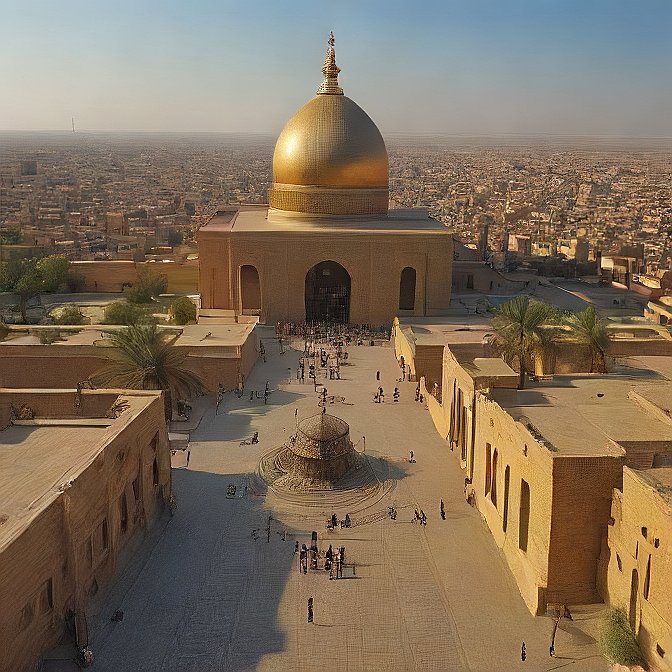
The trip to Baghdad would be incomplete without a dive into the most diverse and complex food life of this city. Urban food is one jaw-watering feast of delicious Iraqi history and food, and millennium-old traditions.
Masgouf is another meat, and this is a grilled carp fish, which is the most likely to be the most renowned foodstuff. And is cooked slowly on an open flame, and it is flavoured with tamarind, lemon, and salt. It is commonly consumed, particularly within a region along the Tigris River, where it is enjoyed with untouched bread and preserved vegetables in the outdoor eating places.
There is also Dolma; the savoury, coloured stew of grape leaves and eggplants and peppers, which are stuffed with rice, which has been spiced and thrown together with ground up meat. It is a meal that people of the UK use to feel good, and in addition, use it when there is a family gathering or holidays.
Try not to miss Tashreeb, a healthy plate of soaking bread that is stacked with lamb or chicken, chickpeas, and lots of thick soup, an Iraqi home cooking dish.
In Baghdad, tea is not only good but also a ritual. People of the areas meet in old tea houses and enjoy Iraqi black tea in small glasses of tea, usually very much sweetened and accompanied by card games or silent chat.
The culture of street food is also active. There are shawarma stations and samboosa carts, sellers of kleicha (Iraqi date cookies), and roads are filled with appetising smells and cheap pleasures.
Culture and Festivals: Baghdad’s Living Spirit
Besides all the historical upheavals, Baghdad has not lost its cultural pulse by using festivals, art, and storytelling of the ancient city. The creative spirit of the city lives in all bookstores, galleries, and open readings.
The Baghdad International Book Fair is one of the most anticipated events of every year, and it gathers the representatives of the literary world; the authors, publishers, and readers of the whole Arab world. It is a fete not only of literature, but also of free thought and speech.
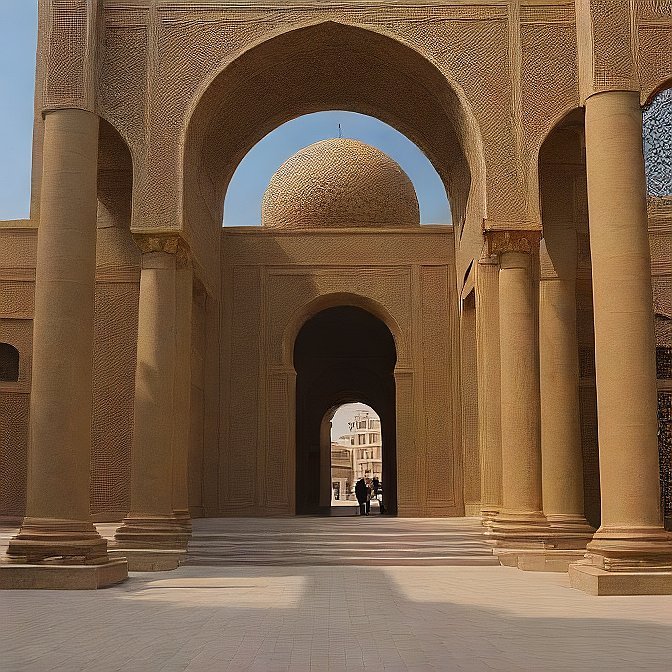
There are frequent calligraphy exhibitions, poetry readings, and theater events held in the restored cultural sites and community centers. The poets of Iraq like to cover deep emotional and political themes, and are still very inspirational to the old and young generations.
Street art and public murals are more and more common, turning the walls of the city into the canvases of opposition and hope. In a lot of brushstrokes and lyrics, the citizens of Baghdad assert themselves as people. The culture is not merely retained here in Baghdad, but it is an actuality of life to many.
Conclusion
Baghdad is not only a city of capital, but also a city of strength, wisdom, and richness. Having a rich history in its centuries-old past at the time of the Islamic Golden Age, and dynamic and dynamic present days still full of poetry recitals, street food, and small shops that offer a serene view of the river, Baghdad is continuing to tempt people who dare to look beyond what is reported in the news.
Of particular importance why Baghdad is so special because it is a place where people tend to visit. Each and every alley is replete with history, each and every tea house is replete with the local life, and each and every old monument is a reminder to the tourist of the great civilization that played such an important role in the modern world.
To this extent, you will find Baghdad in your list of cities to visit, not just necessarily as the basis of a visit but just as a chance to have something really great indeed whether you are a history lover or a culture hunter or just a person on trip with no definite purpose behind the trip, except to have something great.
For more info: Click Here.
FAQs
1. Is Baghdad a tourist area?
The general situation with safety has become better in recent years, particularly in the centralized locations. The travellers are, however, advised to monitor the government travel advisory, use local guides, and show caution.
2. What is the best time to visit Baghdad?
Visiting Baghdad is most appropriate during spring(March-May) or autumn(September-November) since they are not too hot to go out.
3. Can foreigners visit Iraqi cultural sites in Baghdad?
Of course, Baghdad is the place where one can find some cultural and historical destinations, which can also be visited by foreign visitors. Among the tourist attractions that can be enjoyed by foreigners with or without an official guide escort are the Al Mutanabbi Street, the Abbasid Palace, and the National Museum.