Table of Contents
Introduction: Discover the Enduring Magic of the Taj Mahal
One of the most beautiful buildings ever designed, the Taj Mahal is likely to leave all those who have come across it speechless as it rises majestically on the banks of the Yamuna River in Agra. This ivory white masterpiece is a marble piece which was commissioned by the Mughal emperor Shah Jahan in the 17th century, as besides being a tomb, also a symbol of the immortal love of which his wife Mumtaz Mahal was to be remembered.
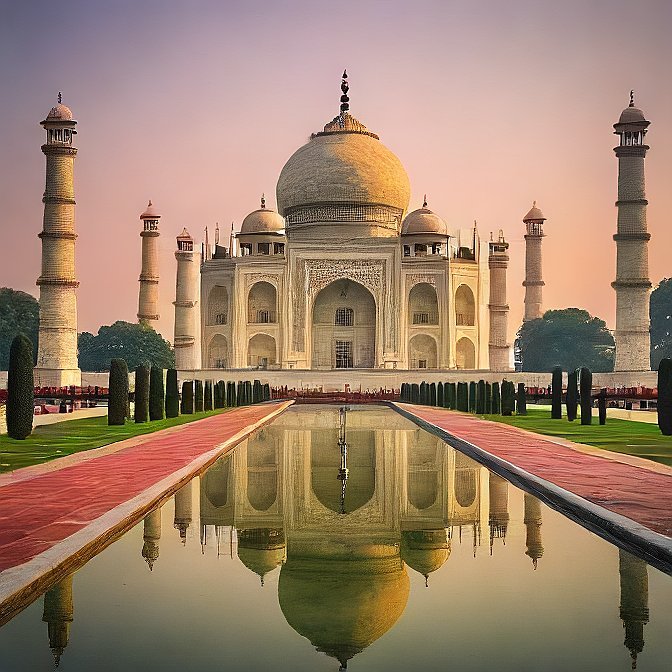
Today, the Taj Mahal is referred to as a UNESCO World Heritage Site globally, and it is among the famous tourist sites in India that receive more than millions of tourists. Still marveled by the travelers, historians, architects, romantics, are its breaking-into-pieces fabulous domes, classical perfection of artistic shape of what should be perfectly symmetrical architecture, and its beautiful art made out of intricate form and material.
However, behind its most famous silhouette, there are numerous stories, secrets, and symbolism that not every person has heard of. In this post, we will learn 8 interesting things about the Taj Mahal, and it is not only about the changing color marble and myths of the Black Taj, but also about the whole crew of masons and their masterful work on every stone.
The Taj Mahal is not just a mausoleum; it is a classic edifice to love, symmetry, and workmanship.
1. A Monument Built for Eternal Love
The Taj Mahal has pride and place not only among the most beautiful constructions, but among the most emotional ones too. It was commissioned by Shah Jahan, the Mughal Emperor, in the year 1632 as a memento to his wife Mumtaz Mahal, who had just died after bearing their 14th child. As it was immensely devastating, Shah Jahan attempted to make her memory by developing a mausoleum where they could communicate unwavering love eternally.
The Taj Mahal has currently been referred to as one of the most commendable presents that has ever been there to an individual and can be termed as the greatest love legend that has ever been carved on marble. Even every specific detail of its construction (the arrangement of flowers, delicate calligraphy) tells the story of love, sorrow, and commitment.
2. It Took Over Two Decades to Complete
The whole of the Taj Mahal building was a herculean mountain, which measured a duration of over 22 years (1632- 1653) to complete. It required the labour of over 20,000 labourers, artisans, and architects imported into India and Central Asia. The project also used hundreds of elephants to transport the different materials, including the white marble, which had been transported all the way up to Makrana in Rajasthan.
This immense work led to a building that is characterized by symmetry and balance, besides having fine details. The dome in the centre, the minarets all around, were painfully designed in such a way that the visuals would speak.
The project is one that is of complex dimensions and accuracy needed to work out the design, as it is a continuing example of the Mughal engineering and vision.
Check Out: Colosseum, Italy: 4 Timeless Reasons to Visit Rome’s Legendary Arena.
3. Made from Marble That Changes Color
The Taj Mahal is one of the most special places that takes a different shade at various times during the day and in different lighting conditions. It was constructed of superior quality white Makrana marble, which renders its surface colors of the sky that is pinkish during the dawn, white in the middle of the day, and silver in moonlight.
This is not only a great appearance shift but a rather symbolic one. According to the majority of people, the colours changing are applied to the different emotions in love: joy, sorrow, peace, and longing.
To tourists and photogs, the changes provide a constantly changing scene, and no moment spent at the Taj turns out to be similar.
4. Perfect Symmetry with One Mysterious Exception
The Taj Mahal is very much appreciated because of its flawless symmetry. All the architectural features, including the gardens and fountains, the four minarets, and the twin red sandstone structures on each side of the mausoleum, have brought the element of perfect balance. But there is one exception, which is curious.
The tomb of Shah Jahan himself is the sole asymmetrical element. His death followed, whereby he was buried adjacent to Mumtaz Mahal, but his cenotaph somehow interferes with the design perfection. It is sometimes interpreted as a sad reminder: one is the creation of love, and the other is the accidental part of the Taj that was made to bury the emperor.
Certain historians suggest that Shah Jahan had initially intended to construct his own Black marble Taj Mahal on the opposite side of the river; therefore, it is another reason that enhances the mystery and romantic legend on the site.
This slight disproportion makes the Taj Mahal even more mysterious, as it is specific and at the same time has an element of human fault.
5. Calligraphy, Gem Inlays, and Marble Artistry
Otherwise than its majestic construction, the Taj Mahal is a work of delicate detail. The monument is decorated with fine Persian calligraphy with verses of the Quran, inlaid using black marble. These inscriptions get marginally bigger with height and look practically the same to the viewer- a piece of art in its own right.
There is also marvelous pietra dura (stone inlay) in the Taj. More than 28 kinds of precious and semi-precious stones, such as jade, lapis lazuli, turquoise, and amethyst, were painstakingly inlaid in the white marble to form floral images and geometric shapes.
This degree of workmanship is the masterpiece of the Mughal art, which is a mix of Islamic, Persian, and Indian styles into one of the finest and most detailed stands of marble work in the whole world.
6. A UNESCO World Heritage Site Since 1983
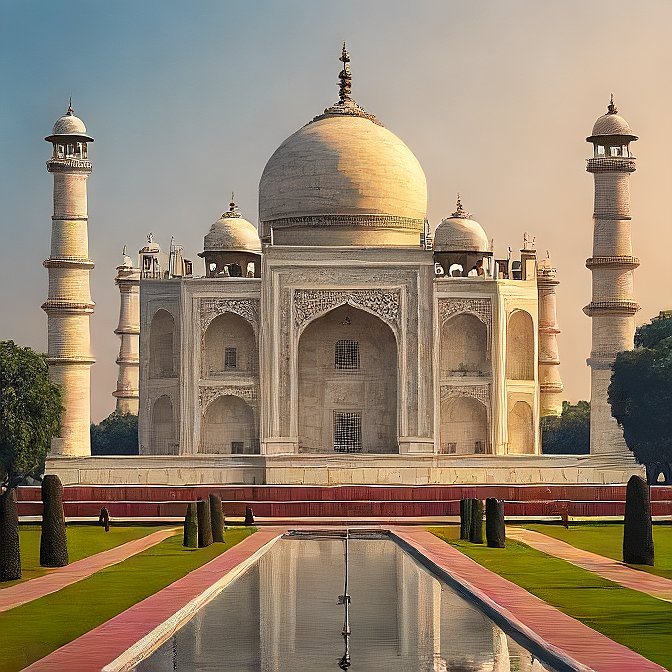
The Taj Mahal was declared a UNESCO World Heritage Site and has been worth the universal value as a cultural asset in 1983. UNESCO hailed it as the jewel music art of the Hindus in India, and also as a masterpiece of the world heritage.
Being included in the list has contributed to the spread of global awareness of it, as millions of visitors stream to this location annually, and it is considered to be one of the most famous tourist attractions worldwide.
Concurrently, the conservation issues that the monument is exposed to have been highlighted by the recognition. Its unblemished aspect has been jeopardized by pollution as well as by overcrowding and weathering, and has attracted conservation actions on the part of Indian authorities and other international conservation organizations.
The Taj Mahal today is not merely a symbol of love and art; it acts as an effective reminder of why we must take care of the greatest heritage all over the world.
7. The Myths and Legends Surrounding the Taj Mahal
The Taj Mahal has created mystery in the last few centuries, and not only in the eyes of those who admire its glory but also in the many myths and legends around it, all told, romantic or tragic. A so-called Black Taj Mahal, so envisaged by Shah Jahan on the other bank of the river Yamuna, as a mirror-image of the original, built wholly of black marble, is perhaps one of the most notorious. No concrete piece of evidence can bring credence to this theory, but the ruins of a place on the other side of the river in Mehtab Bagh have been speculated about through the generations.
The other immortal myth is that the hands of the Taj artisans were cut by Shah Jahan after the Taj was finished so that no one could ever create anything of this stuff. The narrative is popular and historians refer to this as a myth since none has been found in any sound history of people to prove the story.
Though such stories are mostly a black lie or exaggeration, they have given the Taj Mahal a certain extent of mysticism and made approaching it both emotionally and culturally easier.
8. Visited by Millions, Loved by All
The Taj Mahal stands out as being of the monuments that are visited regularly by a large number of people in the world, with a recorded standing of more than 6 million tourists visiting the site every year. The tourists who visit its every corner come as they are on a mission to see its beauty as well as to know more about its history. Its clients comprise the royal, world, and celebrities like Princess Diana, President Obama, etc, and as each of them is enchanted by the primitive beauty, the clock is in reverse.
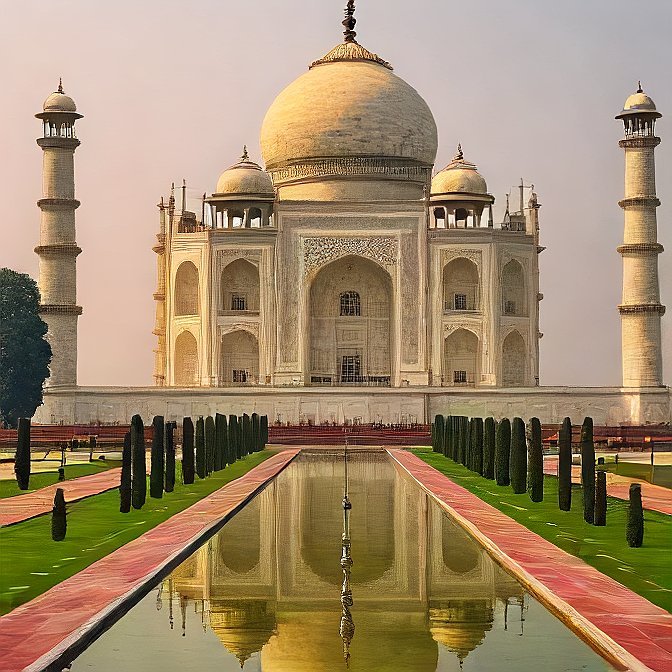
In order to meet the demand of the international tourists, the facility provides numerous types of tickets: a visit in the morning, in the evening, during the full moon; all of them with an individual view on the colors and the hues of the monument and on its ambiance.
Travel tips for visitors:
- The most favored season to visit is from October to March, when it is also cooler and skies are clear.
- Get there early in the morning when there are not many people around, and shoot in the sweet morning light.
- There are dedicated entry queues and prices (check online in advance) for foreign and Indian nationals.
- Do not carry with you big bags and snacks: they check carefully.
Having united scientific superiority, emotional untranslatability, and the status of a world-famous venue, the Taj Mahal remains not only a place to add to the bucket list, but a breathing monument that everyone is impressed by when visiting it.
Conclusion: The Taj Mahal—Where History Meets Heart
Not many monuments in the world can beat the symbolism and the perfection of the Taj Mahal. Constructed with love, designed with a mindblowing craftsmanship, and cloaked in ages of stories, it has become one of the monuments of the Indian cultural heritage and human dedication at its greatest.
It has its glittering white marble, which changes with light and shade, its styling, and its romantic tales; the Taj Mahal has continued to thrill tourists and historians, as well as dreamers.
Here is one place where history and heart do really meet.
For more info: Click Here.
Visit the Taj Mahal, as you can see, has been commissioned to be one of the most beautiful love monuments in the world.
FAQs About the Taj Mahal
Q1. Can you get inside the Taj Mahal?
The visitors will even be free to look at the main mausoleum complex, including the gardens, the mosque, as well as the tomb chamber. Tourists will, however, not be able to enter the actual tombs but will see the replicas on the surface (above the actual graves) and the actual ones locked up below.
Q2. At what time should we visit the Taj Mahal?
As regards the time to visit, it is the best time of the year. It occurs, however, between October to March, and it is colder, and the skies are normally clear. Early morning has the perfect light and is not so crowded.
Q3. So, how do I purchase tickets to the Taj Mahal?
The tickets are either available by means of the online sites of the Archaeological Survey of India (ASI) or are sold on the spot at the ticket counters at the gates of entry. The Indian and foreign tourists have varied ticket prices, as well as the possibility to add a visit to the main mausoleum.