Table of Contents
Introduction
Stockholm is the vibrant capital city of redefining the future of Sweden by remembering the past. The political center of the country is not the only reason why it gains prestige and popularity; it is also a worldwide innovation leader, sustainability leader, culture leader, and economic power.
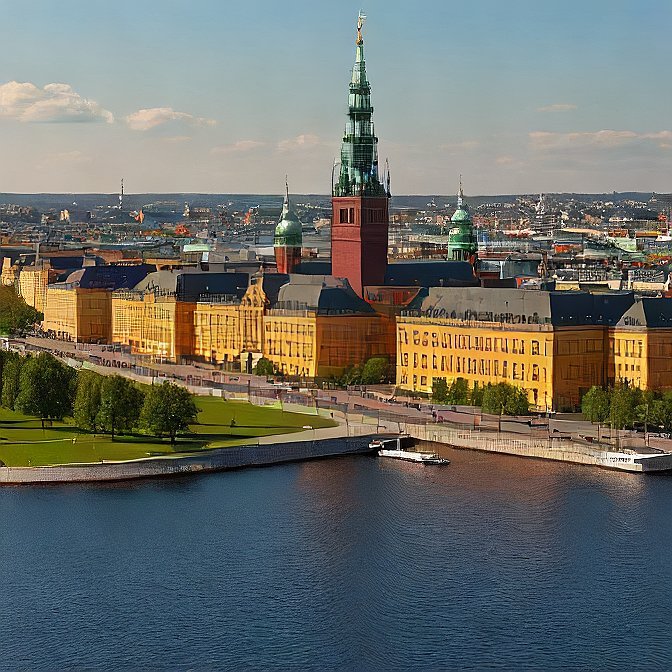
Having given birth to some of the biggest music and tech offerings that the world has ever seen, such as Spotify, Klarna, and Avicii, and having established the lead in terms of green city design and intelligent infrastructure, Stockholm has always been a city that punches far above its weight on the international scale. However, in spite of this change, the city is very steeped in history. Detour through the mediaeval streets of Gamla Stan, or admire the clean functionalism of Scandinavian design, Stockholm as a city exists in its past as well as its future.
This blog will take you through the history of how Stockholm became a creative, business, and cultural powerhouse- how it has become the flawless mixture of Nordic heritage and contemporary velocity.
From Fortress to Global Capital: Stockholm’s Historical Journey
This city originated as a defensive fortress-trading base, established to protect access to Lake Malaren in the 13th century. It takes its name from the “stock” (log) and the “holm” (islet), which were used as fortifications. With the increase of political influence and economic standing, Stockholm became the center of Swedish growth in the 17th century, during the Swedish Empire.
Centuries of wars, border changes, and internal reforms did not make Stockholm weaker and unstable. The city was able to maintain the status of neutrality in both World Wars, and it became a serene center of diplomacy and the development of democracy. Such an attitude of openness and development preconditioned the contemporary image of Stockholm as a progressive capital possessing a modern history, yet looking forward.
Stockholm Today: Smart, Stylish, and Sustainable
Today, it is the culmination of decades of leadership and innovativeness that has made modern Stockholm the way it is today. Being one of the pioneers of the Smart City, Stockholm is one of the most sustainable capitals. Urban policy dwells on the elements of clean transportation in the city, energy-efficient policies, green space, and a walkable city. The city wants to achieve carbon-zero status by 2040.
Sustainability, however, half the story. Stockholm is also the hub of creativity and the economy. It hosts international music technologies companies as Spotify, large fashion brands, design companies, and financial technology innovators such as Klarna. The economy of the city rests on innovation, and the city has one of the most learned and digitally literate workforces in Europe.
This environmental mission and technological entrepreneur appeal of Stockholm presents the city as an example of a 21st-century life, in which environmental awareness and start-up mentality will compete.
Landmarks of Legacy: What Defines Stockholm’s Skyline
Stockholm attractions have never been what they are since ancient times, and all those are the old history of the city, which has been developing ever since.
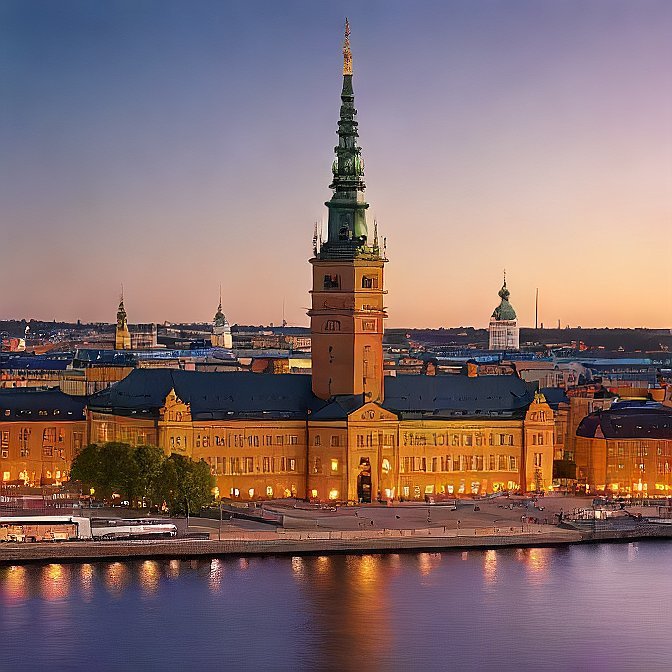
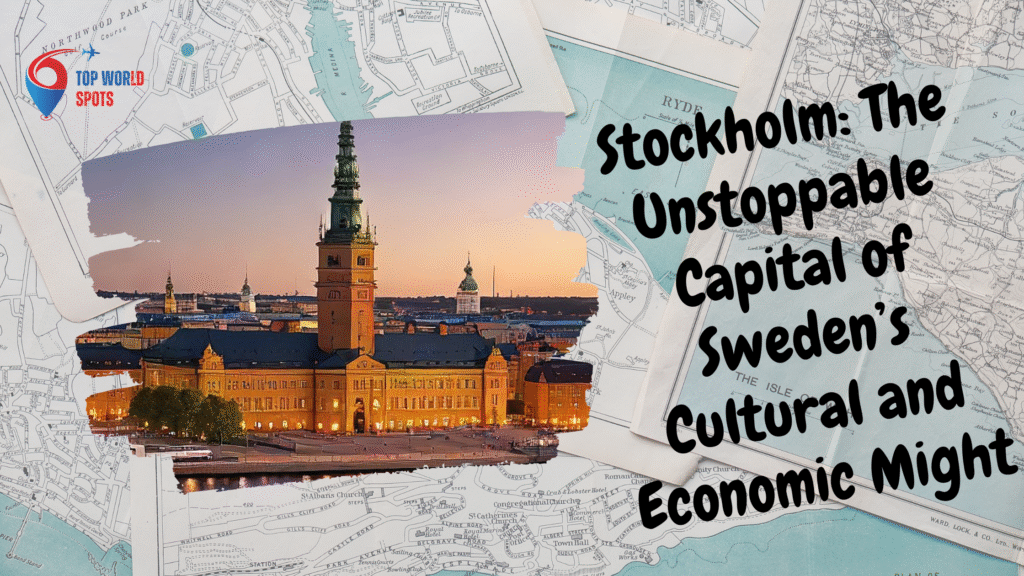
There is a location in the centre of the city which is referred to as the old town (Gamla Stan) and is enclosed with medieval alleys and structures with pastel colors applied on them, as well as cobbled streets. It is close to the Royal Palace, which is the current official residence of the Swedish king. The city’s cultural construction consists of the Stockholm City Hall, which is also composed of the use of the combination of patterns of the architectural style of brick Gothic and the simple contents of Scandinavia.
The eternal destinations are combined with brash new buildings marking the future:
- The Ericsson Globe (presently, Avicii Arena) is the largest hemispherical building in the world.
- The Stockholm Waterfront Conference Centre is an eye-catching combination of steel and glass
- Commons such as the Hammarby Sjostad, an eco-friendly waterfront neighbourhood developed on a reclaimed industrial site
These monuments demonstrate the new vision of Stockholm and its pride, as it retains the royal glamour it had been known for, but adopts a new design and eco-consciousness.
Cultural Capital: Museums, Music, and Swedish Style
To many, Stockholm is regarded as the cultural capital of Sweden, and to date, the spirit of the artist can still be heard in the museums and art galleries, not forgetting the musical halls of Stockholm.
In the Vasa Museum, lovers of history will desire to skip past the well-preserved 17th-century warship. To an aficionado of pop culture, there is the ABBA The Museum, devoted to the most popular sounding wares of Sweden, and Fotografiska is one of the most eventful contemporary photo-promoters of the whole of Europe.
And to those who do not pay considerable amounts of attention to museums, the style is on fire in the streets of Stockholm, too. Here, the minimalistic and well-produced Sweden fashion is made. The city has also maintained its music industry, which has been affecting the world charts, through hit song artists and producers in pop, EDM, and indie music.
Cultural products are global and very local at the same time. The productions stretch the whole gamut of the auditorium and the underground scene in Sdermalm to the royal ballet in the Royal Opera.
Check Out: Brussels: A Thriving Capital Leading Belgium’s Rise on the World Stage.
Life in Stockholm: Neighborhoods, Daily Rhythms, and Urban Charm
An everyday tone of existence in Stockholm is clear and composed in the form, and an euphoric character of a neighborhood. The city has a taste of its own depending on the neighborhood that you may be in, and it is easy to make your way around the city either on walking, by riding, or even on a ferry.
- Sodermalm: Bohemian, art-drenched and cool. A district running high on vintage stores, tattoo shops, and the indie Stockholm spirit.
- The Ostermalm: a place of not only luxury shopping and eating but also high-cost architecture and an upscale neighborhood.
- Vasastan: a quiet area with many parks, bookstores, and the optimum place to have a family, and for artists.
- Green lung in Stockholm: Djurgården. The main island with many museums, gardens, and walking trails, making it a preferred place to do a weekend stroll and a picnic.
Human beings are pursuing simplicity and a purposeful life. You will see people ride into work on bikes in the summer as well as in the winter, have their fika (coffee + pastry break) over in design-geared cafes, and browse in the weekly craft and produce markets. The Stockholm locals like silent working, creativity, and outdoor even in winter.
A Taste of Sweden: Food, Fika, and Modern Nordic Cuisine
The food culture of Stockholm is sophisticated and traditional at the same time, which mixes the heritage of recipes with daring innovations. Whereas you may find yourself in a Michelin star restaurant, a basement food truck, or a conventional cafeteria, the food culture of Stockholm will not disappoint: neither in quality, nor freshness, nor seasoning of ingredients.
Traditional Favorites:
- Swedish meatballs /kttbullar in lingonberry and cream sauce
- salmon and pastrami, salmon and pickled herring
- Warm cinnamon buns and Swedish sandwich cake, Smörgåstårta.
Fika Culture:
In Stockholm, fika is more than a moment of coffee: it is a time out and time in. Coffee shops in town sell coffee and baked pastries such as kanelbullar (cinnamon buns), in comfortable areas.
Modern Dining:
- New Nordic food is exploding, and the best chefs are making simple local produce into the prizewinning tasting menus.
- The international character of the city is seen in food trucks, healthy eating restaurants, and international street food.
- Some of the restaurants in Stockholm that have been found to have several Michelin stars include Frantzan and Ekstedt.
A vibrant feeling and culture of dining, linking the past and the future in each mouthful.
Nature in the City: Stockholm’s Outdoor Soul
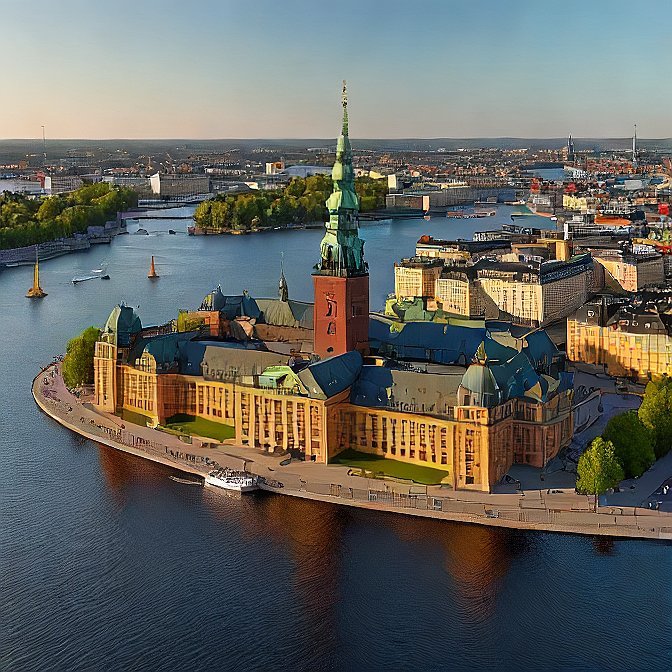
Nature is not escapism, and visiting nature is not a break in Stockholm; it is the natural way of life. Nature is just a step away because over 30 per cent of the city is covered with water and green surfaces. Stockholm Archipelago is not an exception because thousands of islands can be reached by a short ferry, which makes for nice hiking or swimming, or even kayaking.
- The locals in the city take pleasure in plunging into the water at public piers in the summer or skating on the frozen lakes in winter.
- The urban forests and nature reserves like Djurgarden and Nackarenservatet are ideal for walking around to cross-country skiing, or spying on animals.
- Swedes have the right to roam. It is a national rule, so any individual can be a free participant in the countryside even in case it is their personal land, though he is not allowed to ruin nature and human beings. This spirit can be defined in the city of Stockholm by a close cultural relationship of people to the wilderness.
The names are lunch in the park, a weekend at sea, a day off at home, but Stockholmers are not just near nature, they are at home in nature.
Conclusion
Being a medieval fortress and currently providing a universal example of the culture and innovation, Stockholm has shown that evolution is not a lack of identity, but, on the contrary, its strengthening. Today, the city has defined itself as the epitome of economic power, innovation, and a sustainable way of life. It is where the royal palaces and contemporary wonders can find their place in its skyline, where neighbourhoods merrily live with the panache of everyday life, and where people walk with the certainty of a custom as well as a variation.
Stockholm is something special and has more to offer than just being one city that you could visit on a sightseeing tour, be it that it has to do with its Viking legacy, the role it plays on the fore-front of climate empowerment, or simply that it just dares to take it all head on in terms of design and urban living.
For more info: Click Here.
FAQs
After visiting Stockholm, how long will you require so that you may be able to tour Stockholm successfully?
It is a good idea to spend three to four days in the city to visit the major tourist sights and visit museums and neighborhoods, and islands. Addition of a 5th day, in case of your desire to have a day off or to examine the archipelago.
What is the Stockholm language?
The official one is Swedish, though English is also very widespread, at least in restaurants, hotels, shops, and museums. It is English, which is the native language of most of them, and he/she may be in a situation where to can communicate freely as an international traveller.